


There are some family holidays that sound idyllic in theory but rapidly unravel over competing interests, incompatible routines and heated debates about where to have lunch.
Add a baby, a dog and three generations to the mix, and the phrase “relaxing break” can begin to feel wildly optimistic!
Île de Ré, however, pulled it off.
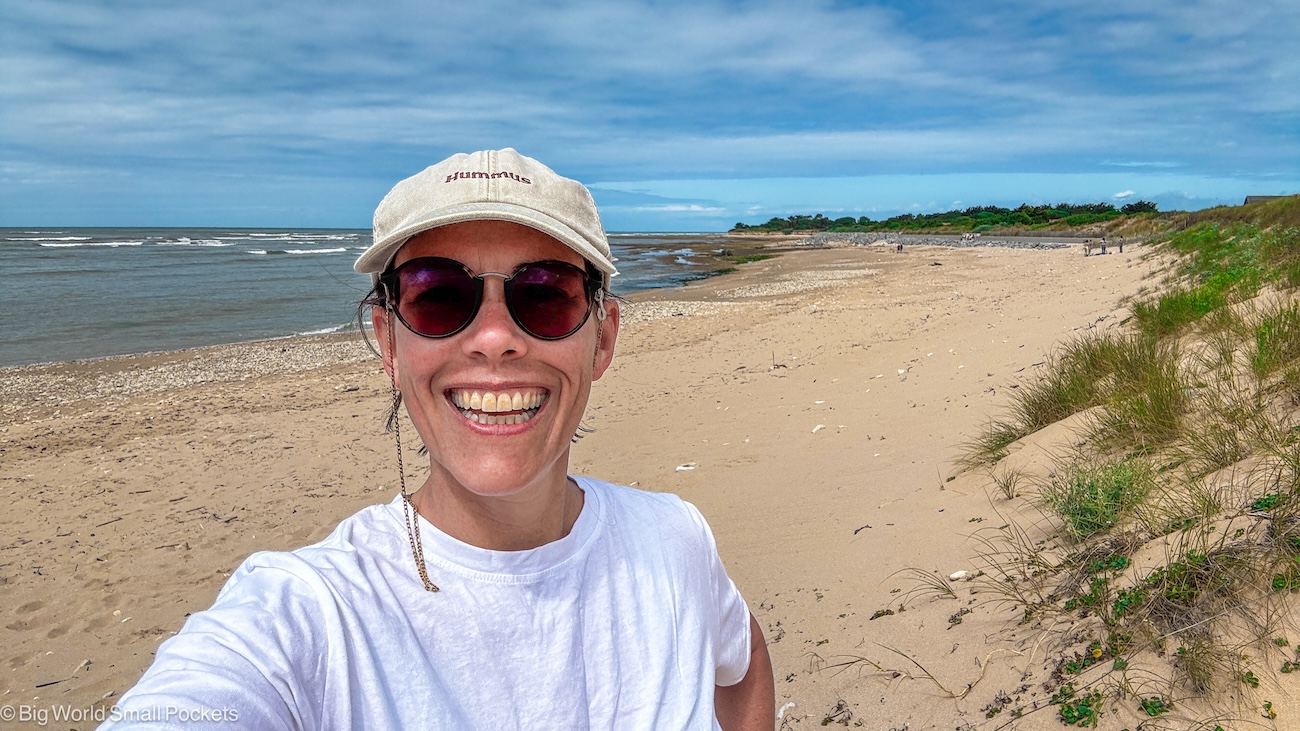
This slender island off France’s Atlantic coast offered something for every member of our travelling party – pretty harbour villages for my parents, excellent food and wine for us, long walks for the dog, and plenty of fresh sea air to encourage the baby to sleep.
Over five days, we explored colourful markets, historic ports, vineyards, beaches and salt marshes, returning each evening to our peaceful holiday home in Sainte-Marie-de-Ré.
We visited in June, when the island felt calm, safe and refreshingly uncrowded, yet lively enough for its markets, restaurants and cafés to be open.
It was exactly what we had hoped to find – an authentic French island escape where nobody needed to follow the same agenda all day…
Related Posts
- Top Things to Do in Ile de Re, France
- Beyond Toulouse: Haute Garonne is Southwest France’s Hidden Haven
- Loire Valley Ventures: Why I’d Stay in Tours over Amboise
Why Île de Ré Works so Well for a Multigenerational Holiday
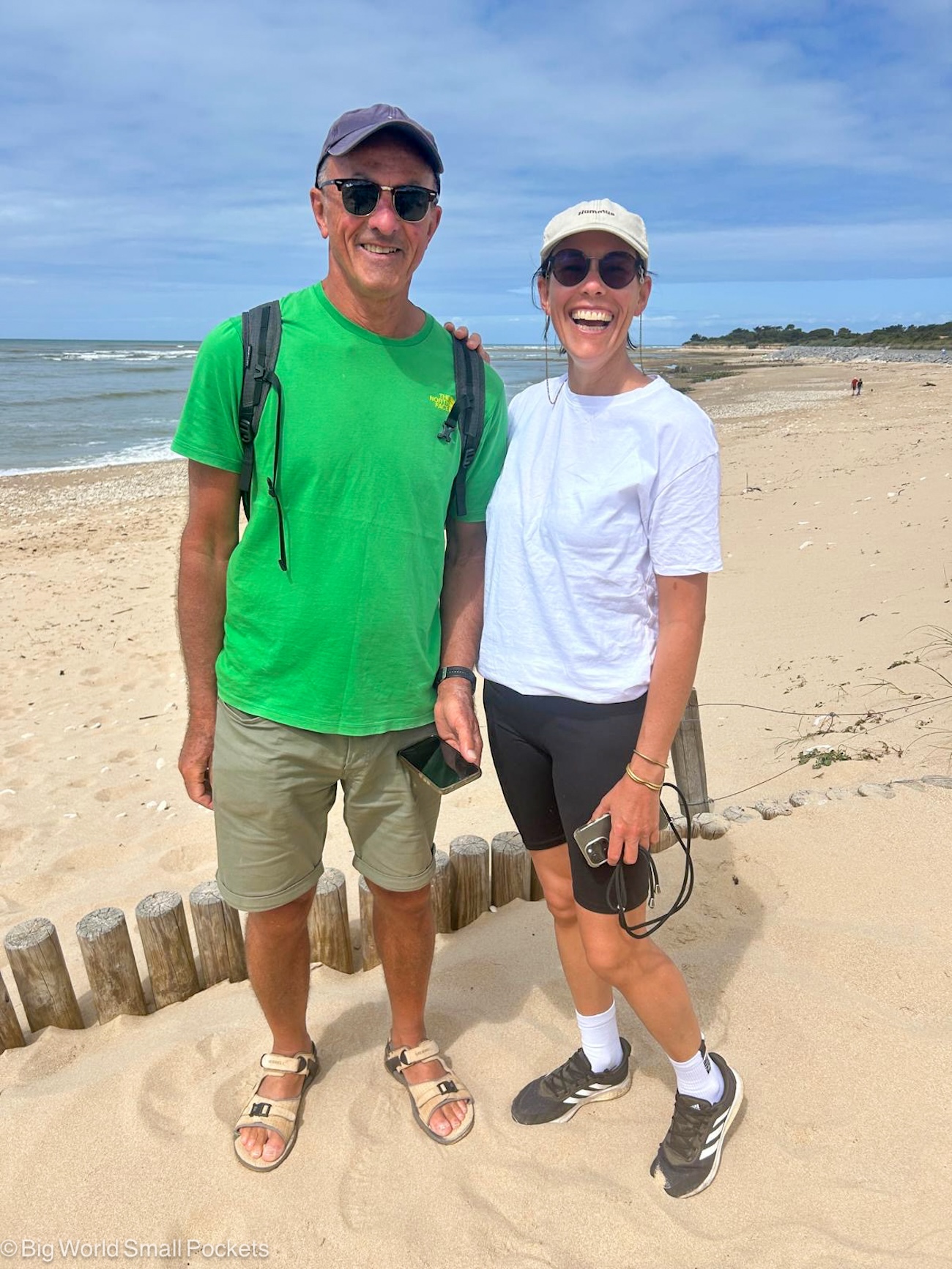
Connected to La Rochelle by a 3km bridge, Île de Ré is compact, largely flat and wonderfully easy to explore.
Its ten villages are linked by roads and an extensive network of cycling trails, while its scenery shifts between sandy beaches, vineyards, pine forests, oyster beds and gleaming salt marshes.
The island feels stylish without being showy.
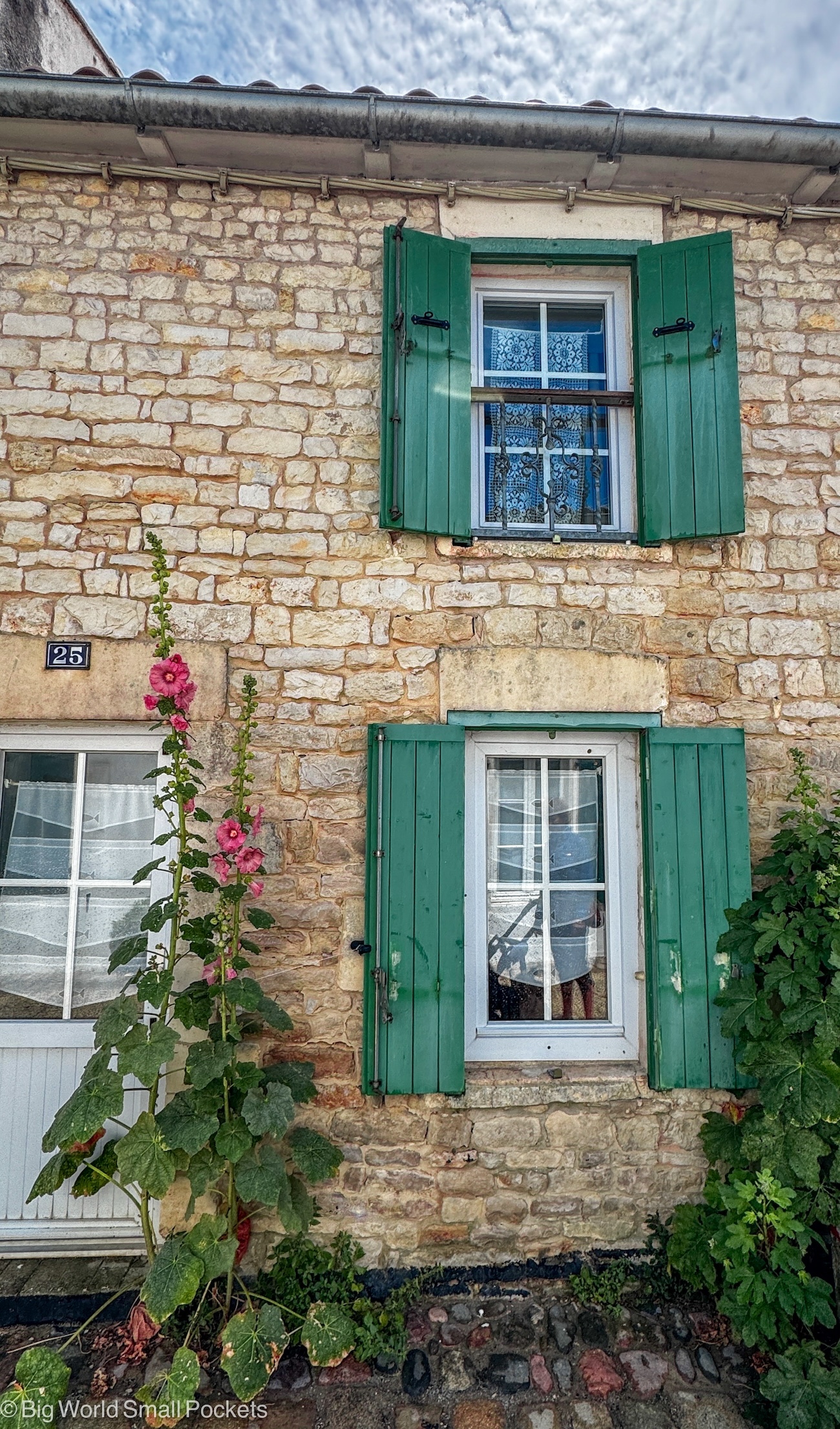
Houses are traditionally whitewashed, shutters come in soft shades of green and blue, and hollyhocks spring from seemingly every pavement crack.
Nobody appears to be in much of a hurry, unless there is one croissant left at the bakery.
For families, its greatest strength is variety without enormous travelling distances.
One generation can browse a market, while another sits beside the harbour with a glass of local wine.
Children can spend the afternoon on the beach, history lovers can explore centuries-old fortifications and enthusiastic cyclists can disappear along traffic-free paths.
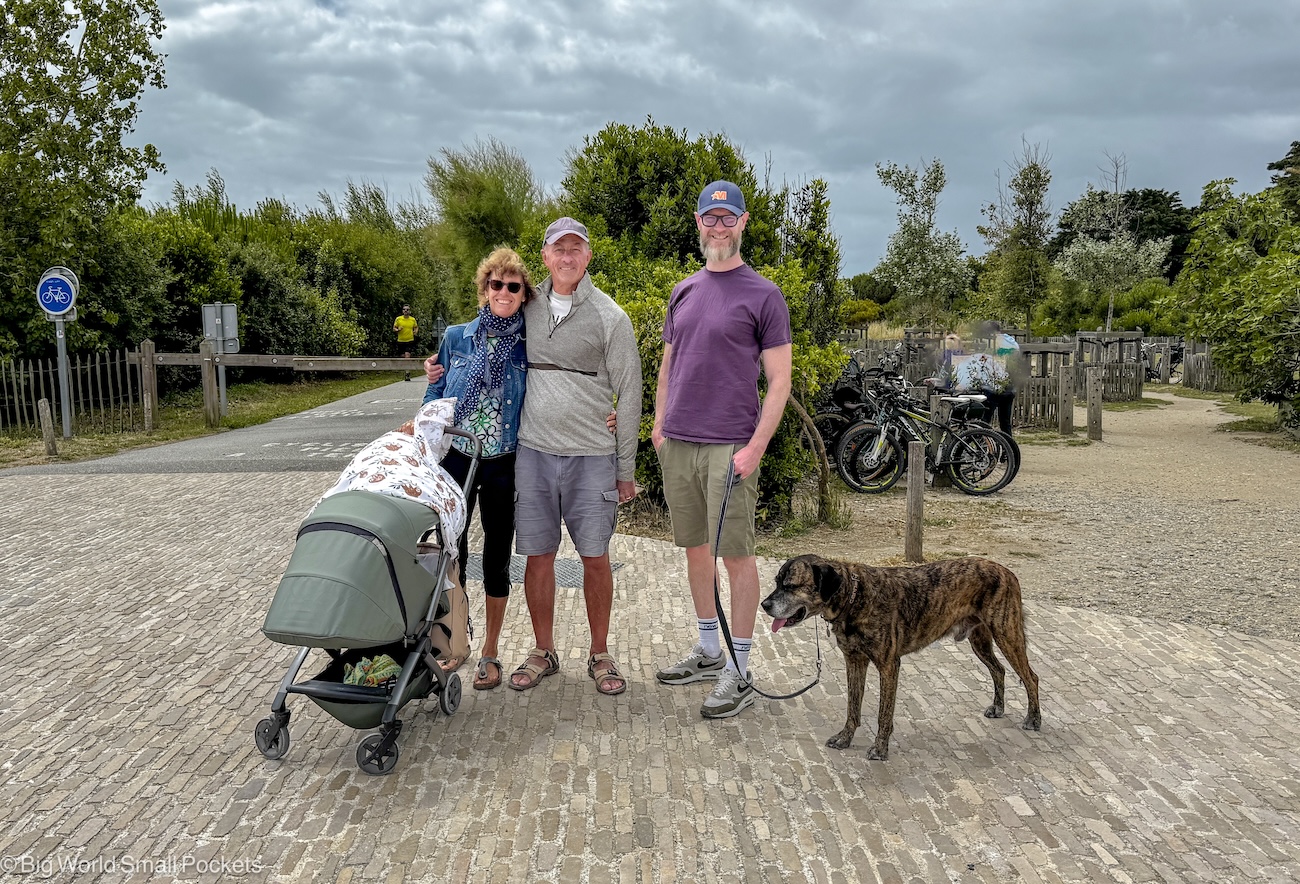
Our group included me, my partner, our baby, our dog and my parents!
That meant coordinating naps, feeds, dog walks, meal preferences and different energy levels, but Île de Ré made the logistics surprisingly manageable.
Rather than racing through a packed itinerary, we planned one main outing each day and left plenty of room for markets, beach walks and impromptu lunches.
It is an approach I would thoroughly recommend.
This is an island best enjoyed slowly.
Where We Stayed


Choosing the right base made an enormous difference to our 5 day family stay on Île de Ré.
We stayed in this family and dog-friendly Airbnb in Sainte-Marie-de-Ré, a 4* home just 300m from the beach.
Sleeping up to 6 guests, it has 3 bedrooms, 4 beds and 2 bathrooms, giving everyone enough space to spread out without turning the holiday into separate mini-breaks.
For a multigenerational trip, having a proper house with different breakout areas was far more practical than booking several hotel rooms.
We had communal spots for family meals, somewhere to relax after the baby went to bed and the flexibility to prepare breakfast or dinner ourselves.
For a UV-fanatic family, the 2 sunny outdoor spaces were a winner too!
Proximity to the beach was brilliant for quick walks with the dog, but the real triumph was the village location.
Sainte-Marie-de-Ré sits on the quieter, less touristy eastern side of the island.
It does not have the glossy harbour scene of Saint-Martin-de-Ré or the same visitor numbers as La Flotte, but that’s precisely why we liked it.
Its whitewashed lanes felt residential and authentic, with a village square, shops and a market that seemed designed for local life rather than coach-trip consumption.
We could wander into the centre from our Airbnb, buy bread and pastries, enjoy a drink at the local bar and walk to the coast without negotiating crowds or searching endlessly for parking.
After visiting some of the island’s busier villages, returning to Sainte-Marie felt like exhaling.
Day 1: Settling into Sainte-Marie-de-Ré
Our first day was deliberately gentle.
After crossing the Île de Ré bridge and checking into the house, we explored Sainte-Marie on foot.
The village is actually divided between Sainte-Marie itself and the coastal neighbourhood of La Noue.
Both have the island’s familiar palette of pale stone, white walls, green shutters and climbing flowers, but neither feels overly manicured.
We wandered through the narrow streets, familiarised ourselves with the local shops and headed towards the beach.
The shoreline here is wilder than the broad sandy beaches farther west, particularly when the tide retreats and exposes rocks, pools and stretches of seaweed-covered shore.
It proved perfect for a dog walk and an easy first outing with the baby.
There were no entrance fees, queues or schedules, just Atlantic air and the smug satisfaction of having chosen a property close enough to the sea to walk there before dinner.
That evening, we ate at the house.
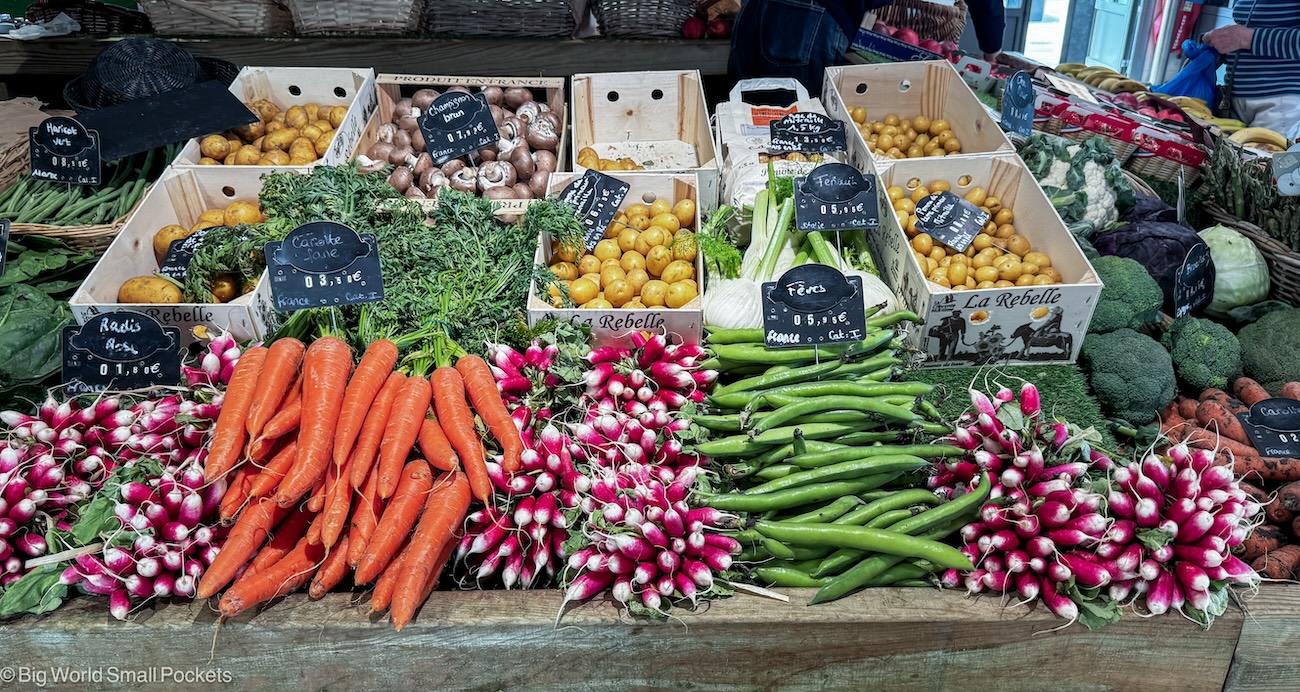
One of the advantages of staying near local markets is that even a simple meal can feel distinctly French – ripe tomatoes, island potatoes, bread, cheese and wine, followed by the sort of pastry purchased “to share” that mysteriously becomes an individual serving.
Day 2: La Flotte & its Beautiful Harbour
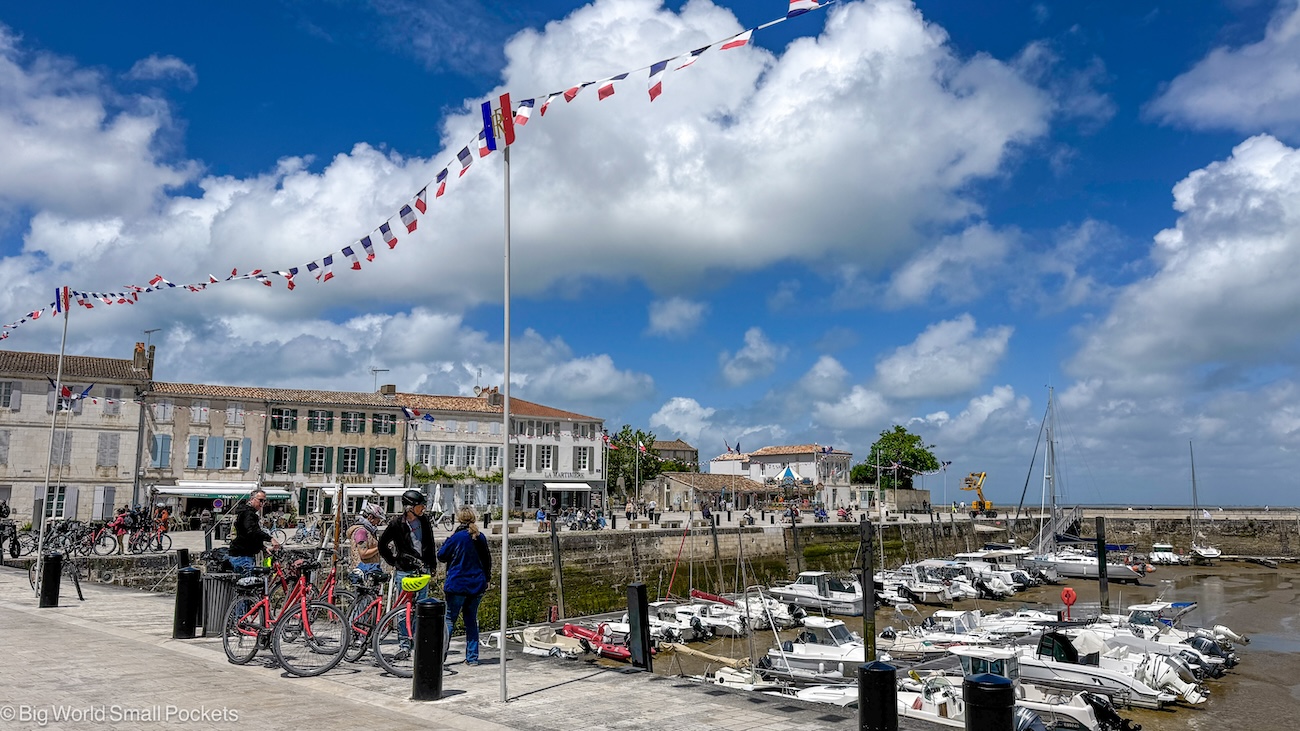
The following morning, we walked to La Flotte, officially recognised as one of Les Plus Beaux Villages de France, or France’s Most Beautiful Villages.
It is not difficult to see why.
Boasting a harbour framed by waterfront restaurants, pale stone buildings and gently bobbing boats, restaurant terraces spill towards the water, while small streets lead away to boutiques, galleries and flower-covered houses.
The centrepiece is La Flotte’s medieval-style market, set within a cobbled courtyard beneath wooden arcades.
It may look as though it was built specifically to torment travel photographers with too many attractive angles, but it remains a working market selling fruit, vegetables, seafood, cheese and regional specialities.
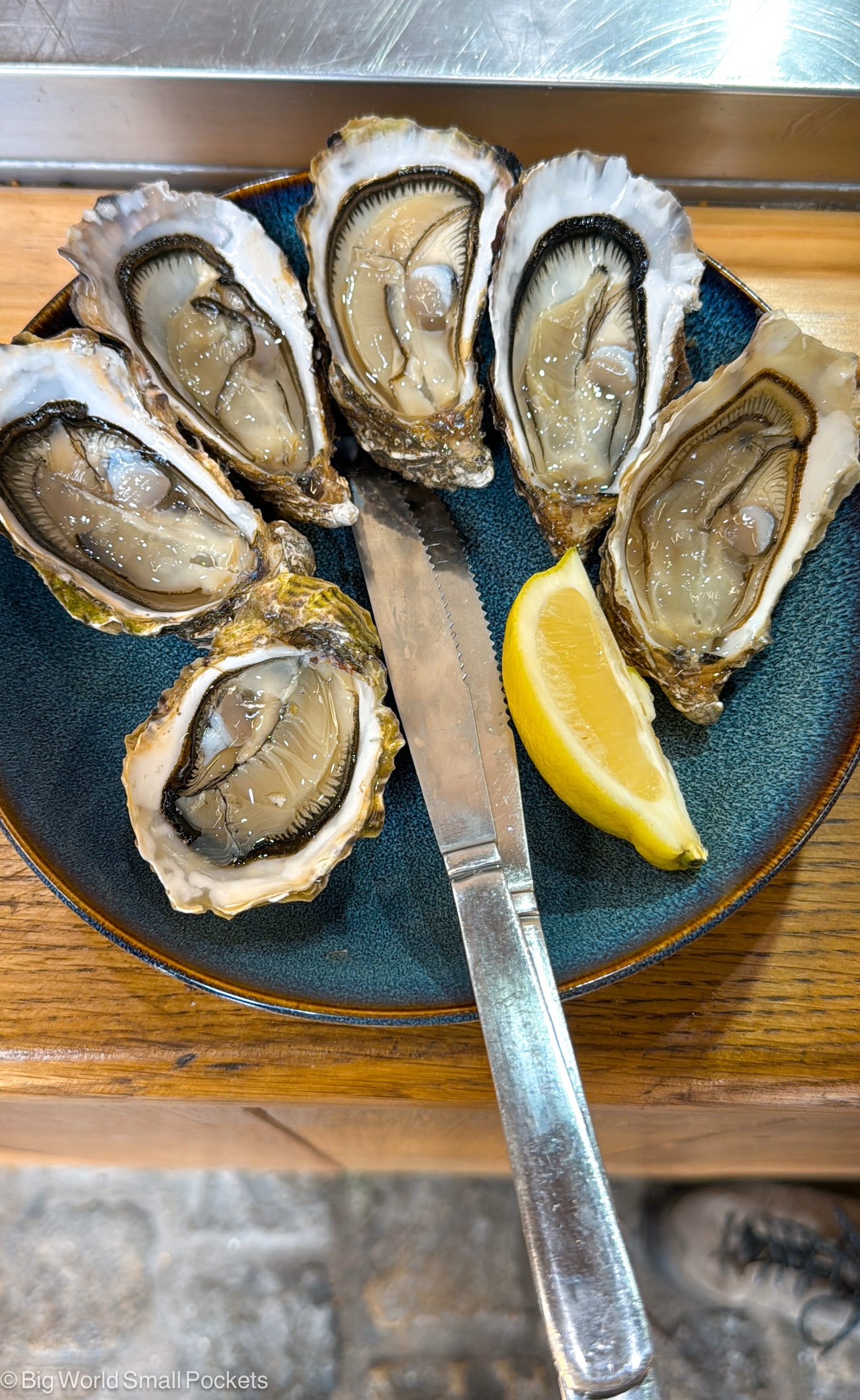
We browsed the stalls, picked up supplies, sampled some of the oysters and wine far too early in the day and settled into the rhythm of island life.
La Flotte is popular, but in June it still felt pleasurable rather than packed.
Its convenient location makes the village an easy outing with both young children and older relatives, because you can combine sightseeing, lunch and the beach without repeatedly getting back into the car.
Families can walk to Plage de l’Arnérault, the village’s sheltered sandy beach, which lies close to the harbour, while early visitors to the market can beat the lunchtime crowds and grab some bargains!
Day 3: Saint-Martin-de-Ré & Le Bois-Plage Market
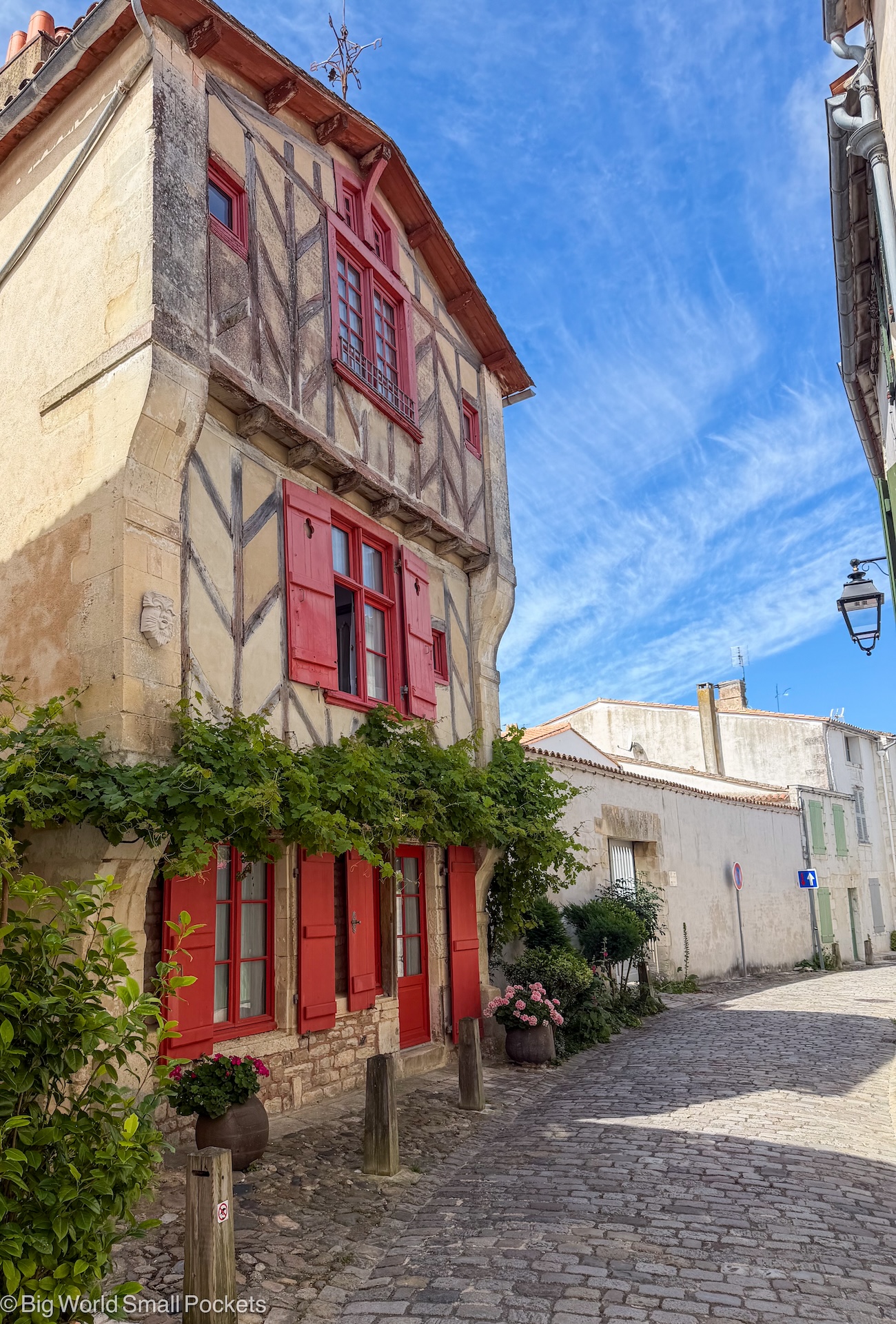
If La Flotte is picturesque, Saint-Martin-de-Ré is the island at its most polished.
The historic capital has an impossibly photogenic harbour surrounded by restaurants, boutiques and ice cream shops.
Boats fill the marina, restaurant tables line the quays, and donkeys in striped trousers appear on souvenirs across town.
The latter is an island tradition originally associated with protecting working donkeys from insects in the salt marshes, and proof that even farm wear can become fashionable if you give it long enough.
Saint-Martin is also one of the most historically important places on Île de Ré.
Its star-shaped fortifications were strengthened by Vauban under Louis XIV and form part of the UNESCO-listed Fortifications of Vauban.
We walked along the harbour and through the old streets, stopping regularly to admire shop windows, boats and menus.
It was one of the prettiest places we visited, but also noticeably the most touristy.
In June it remained manageable; in July or August, I would avoid!
Before or after Saint-Martin, it’s also worth visiting the market at Le Bois-Plage-en-Ré, which became one of our French favourites.
Larger and livelier than many of the island’s village markets, it brings together produce stalls, cheeses, charcuterie, seafood, clothing and household goods.
Inspired by Le Bois-Plage-en-Ré, markets became a recurring pleasure during our stay.
Each village offered its own version, and visiting them gave our days a simple structure – coffee, market, explore, lunch. Frankly, civilisation may have peaked.
Day 4: Phare des Baleines & Wild West
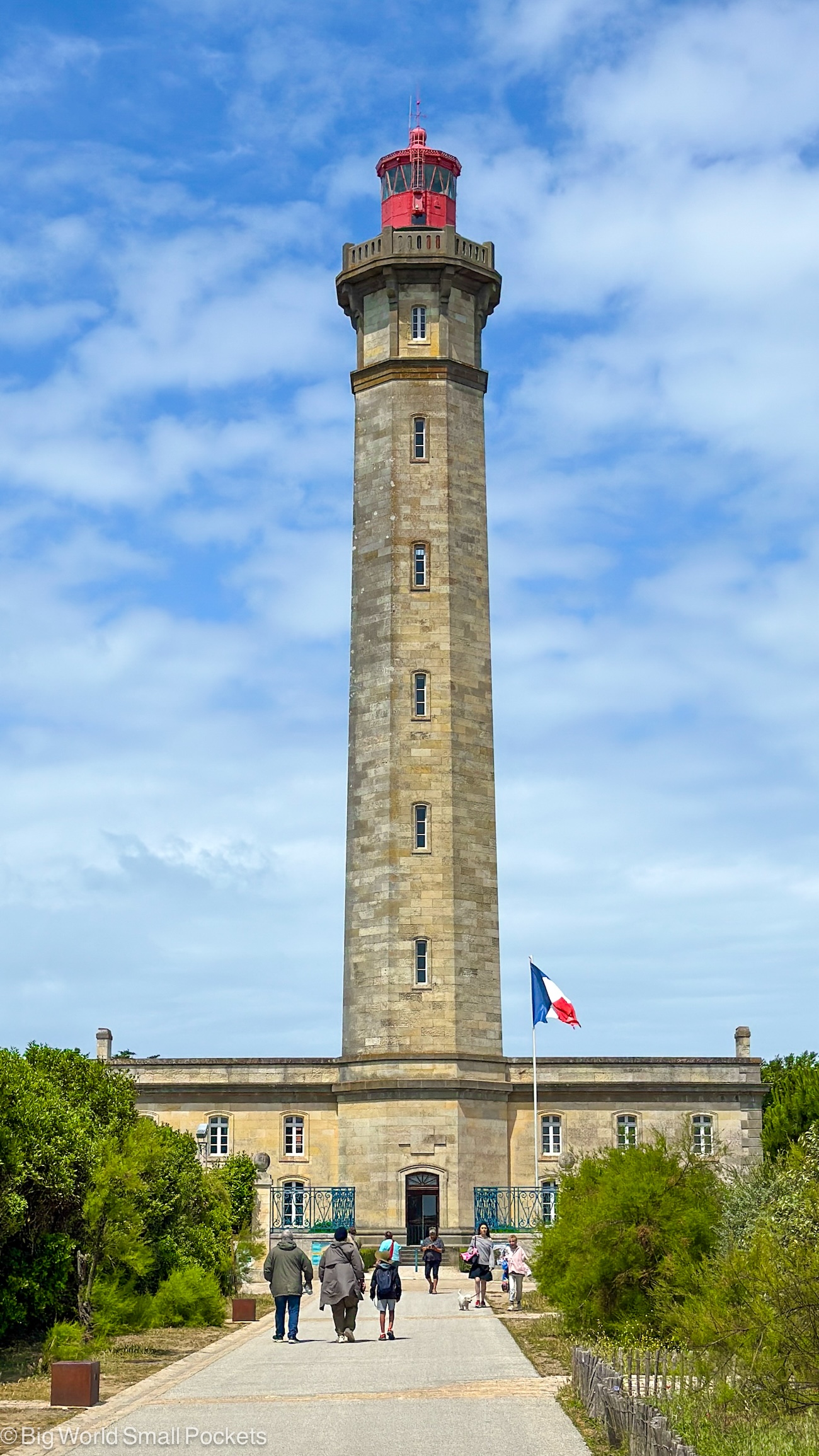
For our longest excursion, we drove to the western end of the island to visit the Phare des Baleines.
Standing near Saint-Clément-des-Baleines, the lighthouse feels far removed from the busier eastern villages.
The landscape becomes broader and wilder, as roads pass vineyards, wetlands and salt marshes before reaching the island’s Atlantic edge.
The present lighthouse was built in the 19th century beside the older Tour des Baleines.
Visitors can climb 257 steps to the top for sweeping views across Île de Ré and the ocean.
With a baby in tow, tackling all 257 was not necessarily the multigenerational bonding exercise we needed, but the site and surrounding coastline were worth the journey regardless.
Nearby, the magnificent Plage de la Conche des Baleines stretches between the lighthouse and Les Portes-en-Ré.
Backed by dunes and forest, it feels considerably more remote than the beaches near the island’s main villages.
This western section also offers a chance to see another side of Île de Ré.
Salt production has shaped the island for centuries, and the northern marshes remain divided into shallow geometric pools where sauniers harvest the famous local sea salt and delicate fleur de sel.
Small roadside shops and producers sell salt, caramels and other island goods.
There are also vineyards producing white, red and rosé wines, alongside Pineau des Charentes and cognac.
Between the salt, wine and potatoes, Île de Ré has achieved an impressively balanced diet.
Day 5: Beach Time Near La Couarde-sur-Mer
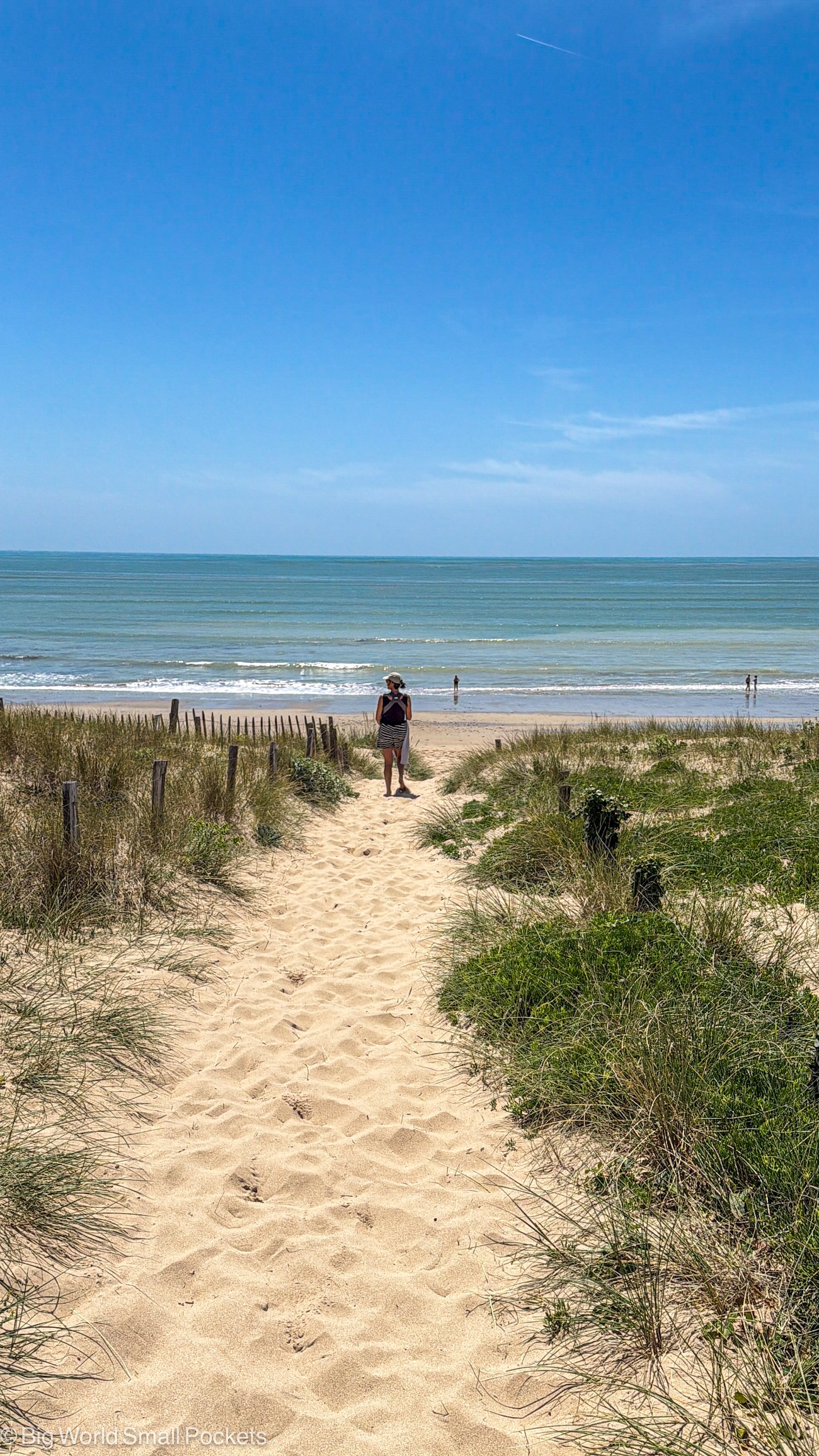
For our final day, we slowed down again and headed towards La Couarde-sur-Mer.
This central section of the island has more than 5km of shoreline, stretching from Plage des Prises towards Plage des Petites Folies.
The broad sandy beaches around La Couarde and neighbouring Le Bois-Plage are among the island’s best for families, with plenty of room for children to play and adults to do absolutely nothing with impressive commitment.
If you want more info, Île de Ré’s official tourism site provides details of the different beaches and seasonal facilities.
The beach we found near La Couarde was gorgeous – wide, peaceful and backed by dunes.
In June there was still space to spread out without feeling as though we had accidentally joined somebody else’s family holiday.
Dog restrictions vary by beach and season, so it is important to check the signs at each access point.
Some beaches prohibit dogs during the main season, while others allow them at specific times or outside supervised zones.
This was the kind of low-key day that made the island work so well for our group.
My parents could walk at their own pace, we could work around the baby and the dog got a proper outing.
Nobody had to queue, climb a monument or pretend to be anything other than genuinely interested in an information panel.
The Cycling Holiday we Will Return For!
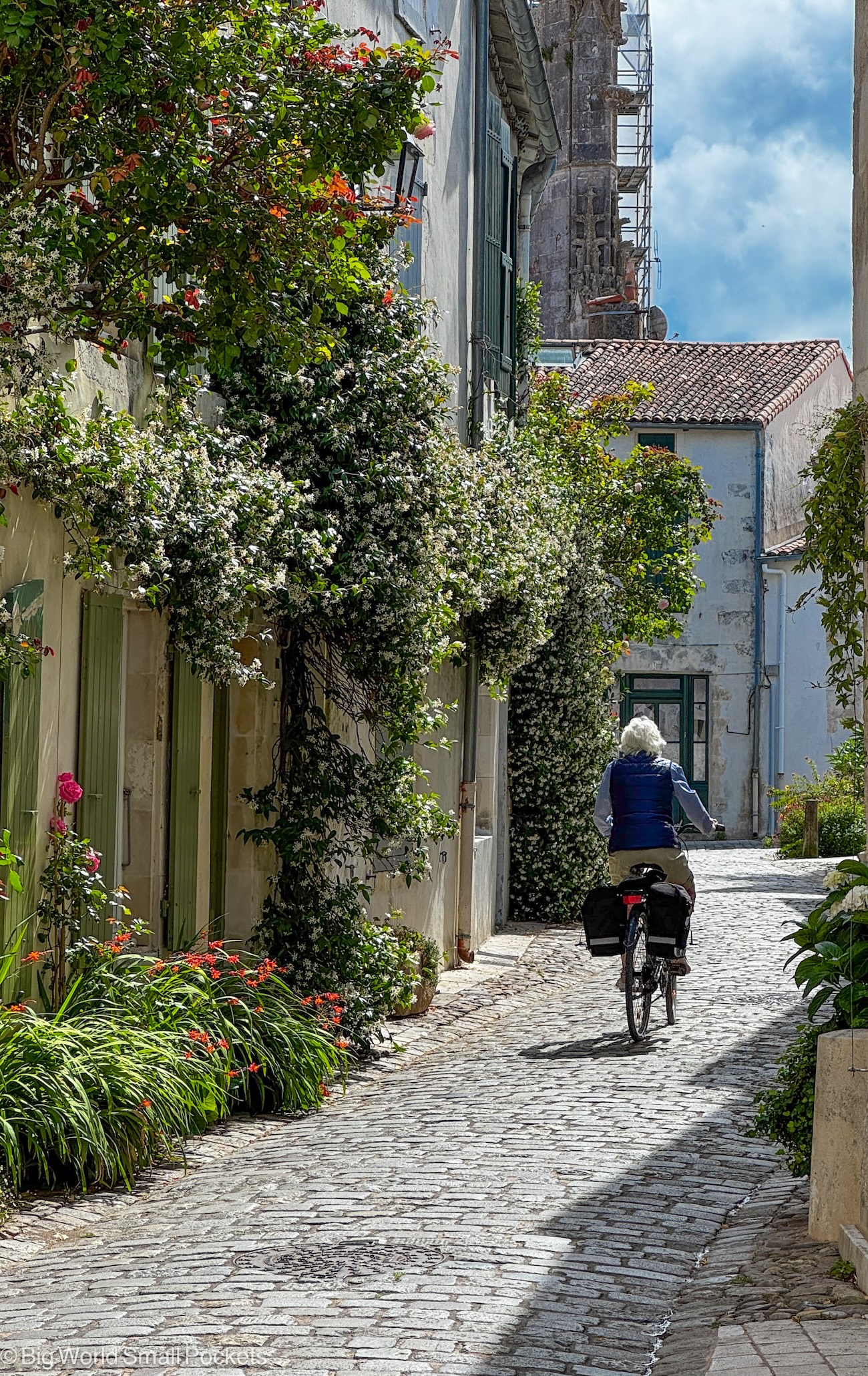
Île de Ré is famous for cycling, with around 110km of marked routes crossing the island.
The terrain is exceptionally flat, and trails pass vineyards, villages, beaches and salt marshes.
We would have loved to cycle during this trip, but with a young baby, the timing was not quite right for us.
However, it has given us a compelling reason to return when the baby is old enough to travel safely in an appropriate child seat or trailer.
Cycling would also reduce the need to find parking or walk to popular villages such as Saint-Martin and La Flotte.
Bike-hire shops are widely available across the island, including electric bikes for anyone who prefers their wholesome outdoor activity with a little mechanical assistance.
For those tempted by a 2-wheeled adventure, I would recommend hiring bikes for several days rather than just one.
From Sainte-Marie, it would be easy to cycle to La Flotte, Le Bois-Plage and Saint-Martin, stopping at markets and beaches along the way.
Best Time to Visit Île de Ré?
June was ideal for our family trip – the weather was warm, restaurants and markets were operating, and the island felt lively without being overwhelmed.
I would definitely avoid July and August however.
Île de Ré’s permanent population is relatively small, but visitor numbers rise dramatically during the French summer holidays.
Accommodation becomes more expensive, roads and cycling trails get busier, parking becomes harder and restaurant reservations require more forward planning.
The bridge toll is also seasonal.
The standard return toll for a car is currently listed (in 2026) as 4€ in low season, 8€ in mid-season and 16€ in high season, with the highest rate generally applying from mid-June to mid-September.
Check the latest dates and prices on the official Île de Ré tourism website before travelling.
Late May, June and September offer a better balance of pleasant weather, open businesses and manageable crowds.
If you do visit in peak summer, book accommodation and restaurants early, avoid driving into the busiest villages around lunchtime and use bikes whenever possible.
Is Île de Ré Worth Visiting with the Whole Family?
Absolutely… particularly if your family prefers flexible days to highly organised resort entertainment.
Île de Ré gave us beautiful villages, colourful markets, sandy beaches, history, seafood, local wine and miles of peaceful scenery, all within an island small enough to explore without spending half the holiday in the car.
More importantly, it gave each generation room to enjoy the trip differently.
Staying in Sainte-Marie-de-Ré completed the experience.
Peaceful, pretty and authentic, with the village and beach within walking distance and the island’s headline attractions only a short drive away, it was honestly the ideal spot.
Île de Ré may be known for chic summer holidays, but outside peak season it offers something much more appealing – a safe, unhurried and genuinely manageable family escape.
5 days were enough to fall for it.
Not quite enough to cycle every trail, taste every market pastry or investigate every vineyard, but those sound like excellent problems to save for next time.
Practical Tips for Visiting Ile de Re
Getting There
La Rochelle – Île de Ré Airport offers flights from the UK. As always, I use Skyscanner to find the best flight deals.
Alternatively, LeShuttle offers Channel Tunnel connections for those travelling by car from Folkestone to Calais in just 35 minutes.
Ferries from the UK also sail regularly to Calais. Check out FerryHopper to compare prices and times.
From Calais, it’s an 8 hour drive to Ile de Re.
Trains from Paris to La Rochelle are direct and take just over 3 hours. Book using Trainline.
From there, it’s best to hire a car to explore Ile de Re. DiscoverCars have some great deals.
Best eSIM for France
Holafly offer unlimited data eSIMs for France that are perfect for staying connected across the country.
Travel Insurance
World Nomads offer simple and flexible travel insurance.
Buy at home or while travelling and claim online from anywhere in the world.
Travel Money
France use the Euro (€).
I always travel Europe with my Wise card, which makes spending abroad cheaper with real exchange rates and no sneaky transaction or ATM fees – grab yours here.
SAVE THIS ARTICLE TO PINTEREST!


This page contains affiliate links meaning Big World Small Pockets may receive a small commission on any purchases at no extra cost to you.
