


If you’re looking for one of the most unique day trips in Georgia, then David Gareja should absolutely be on your list.
Set in a dramatic semi-desert landscape close to the Azerbaijan border, this ancient cave monastery complex feels worlds away from the busy streets of Tbilisi.
Think rock-hewn chapels, windswept hills, faded frescoes and views stretching across the Caucasus steppe.
As a British traveller who loves affordable adventures with a bit of history thrown in, I honestly think David Gareja is one of the most underrated places to visit in Georgia.
It combines culture, scenery and adventure in one easy day trip, all without the huge crowds you’ll find at some European heritage sites.
Here’s everything you need to know before visiting David Gareja in Georgia…
Related Posts
- Top Tbilisi Day Trips: Easy Adventures You Can’t Miss
- Sulphur Baths in Tbilisi: Traveller’s Guide
- 9 Best Places to Visit in Georgia
Where is David Gareja?
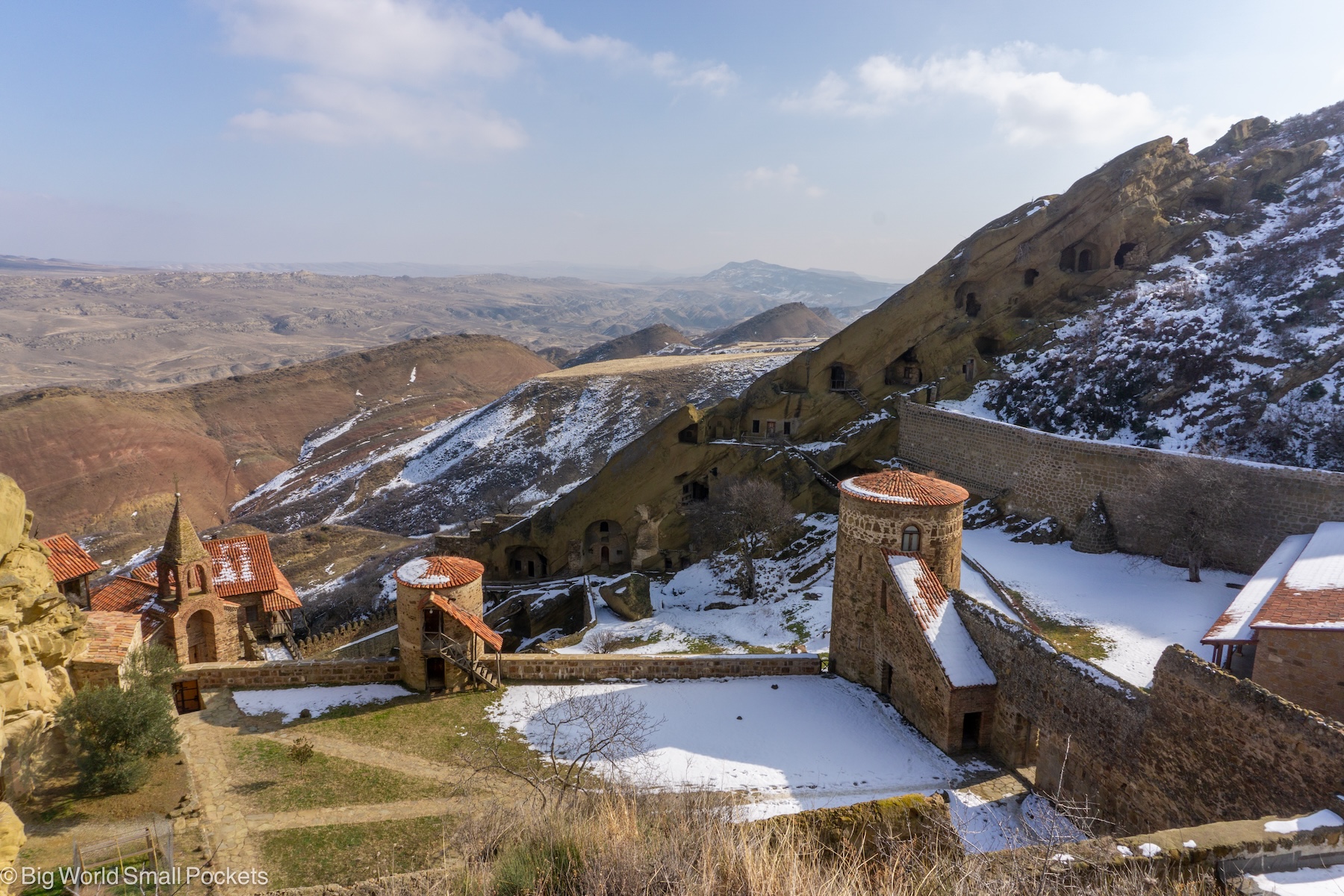
David Gareja Monastery complex is located in eastern Georgia, around 70km southeast of Tbilisi, close to the border with Azerbaijan.
The site sits within the Kakheti region and is surrounded by dry rolling hills and semi-desert landscapes.
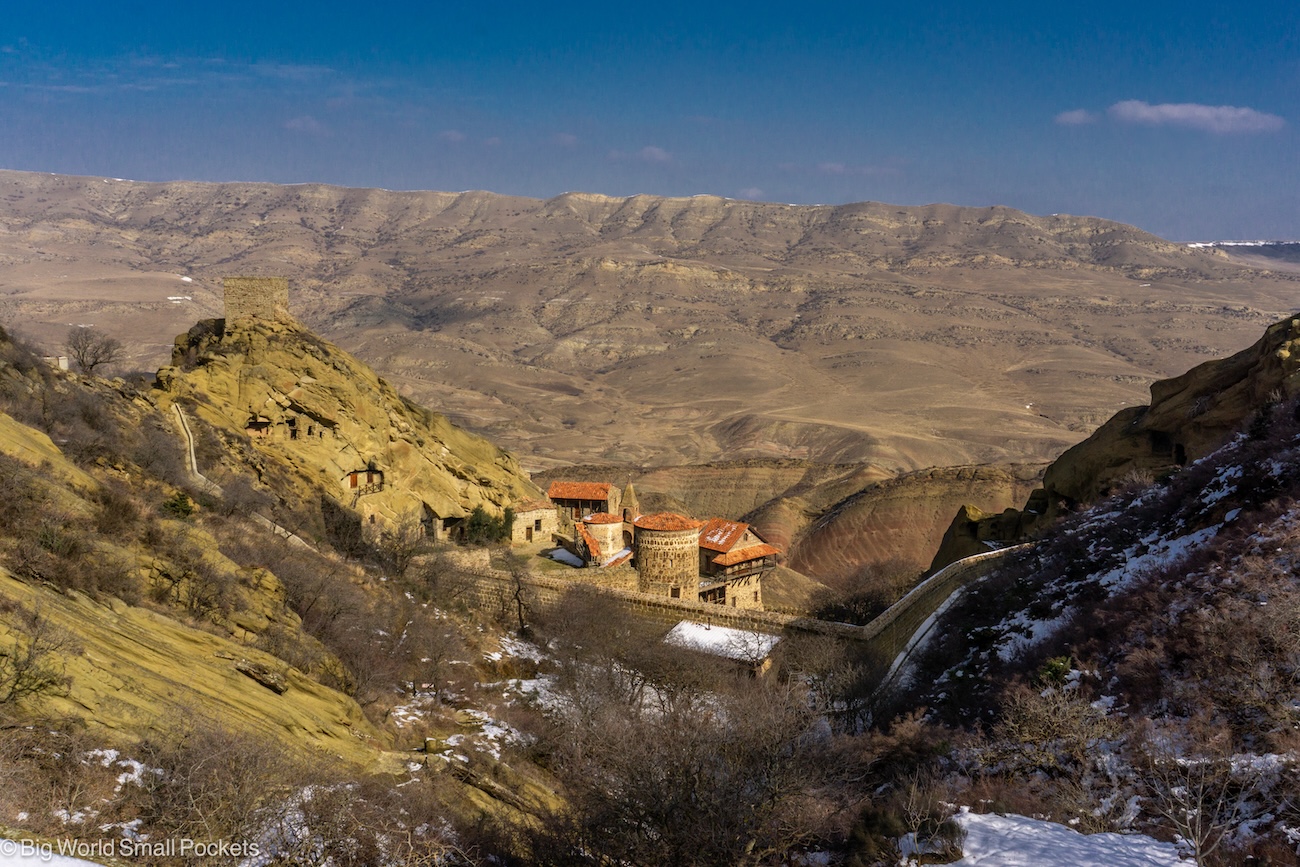
The monastery complex stretches across the Gareja ridge and historically included around 19 monasteries and thousands of monk cells carved directly into the rock.
Why Visit David Gareja?
Landscape Feels Completely Different to the Rest of Georgia
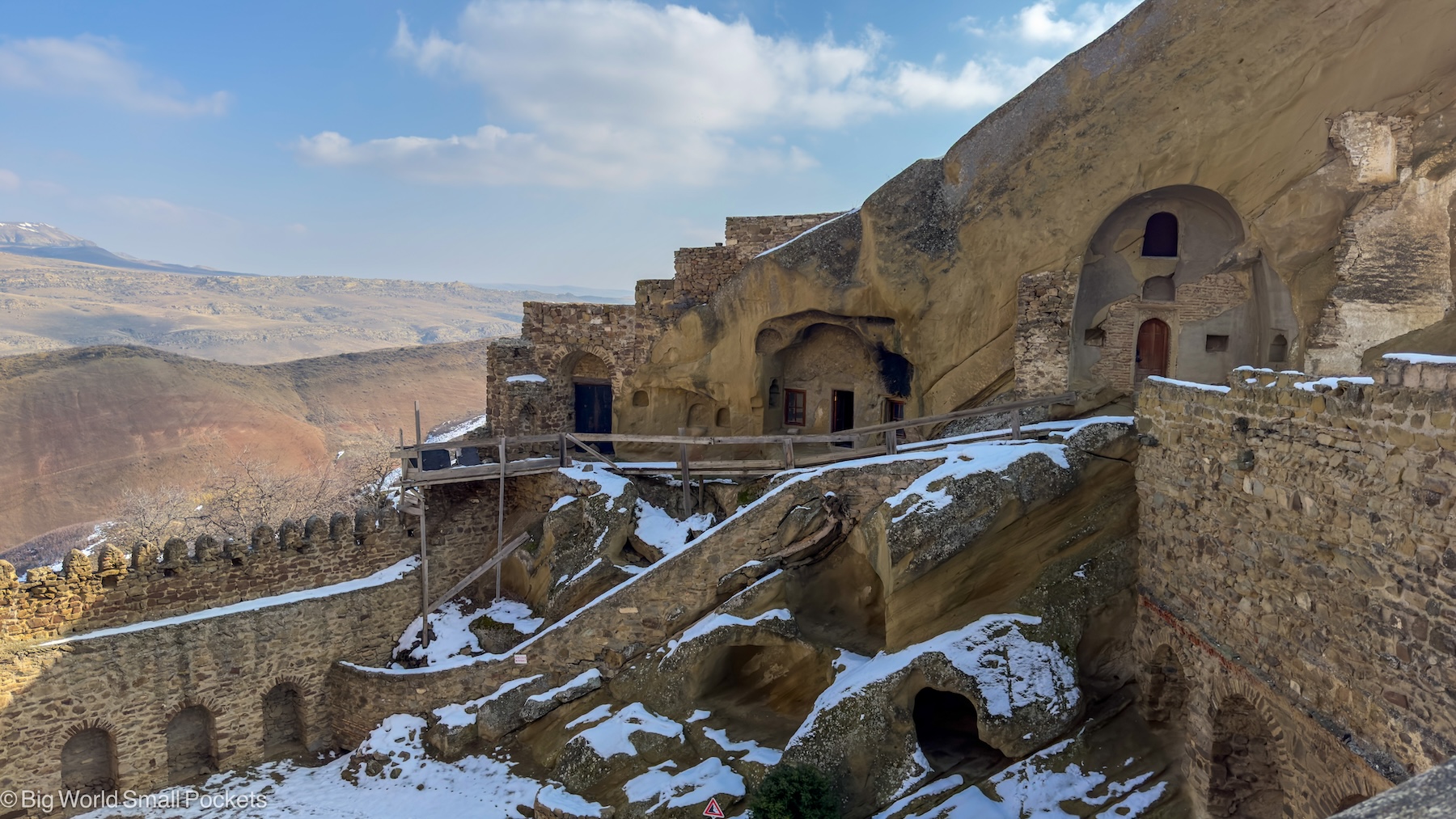
One of the biggest surprises about visiting David Gareja is the scenery.
Georgia is often associated with green mountains, vineyards and alpine villages, but David Gareja looks more like Central Asia or parts of Cappadocia.
The dry hills, rainbow-coloured ridges and rocky cliffs create an almost lunar landscape.
It’s especially beautiful around sunrise and sunset when the hills glow orange and pink.
One of Georgia’s Most Important Religious Sites
David Gareja is deeply significant in Georgian Orthodox Christianity.
The monastery complex was founded in the 6th century by Saint David Garejeli, one of the famous Assyrian Fathers who helped spread Christianity through Georgia.
Over the centuries, monks expanded the site into a huge spiritual and cultural centre.
At its peak, the complex contained thousands of caves, chapels and living quarters.
Budget Friendly
One of the best things about David Gareja is that visiting is still very affordable.
Unlike many historic attractions in Europe, entry to the monastery itself is free, and transport from Tbilisi can be done cheaply through shared tours or transfer services.
History of David Gareja
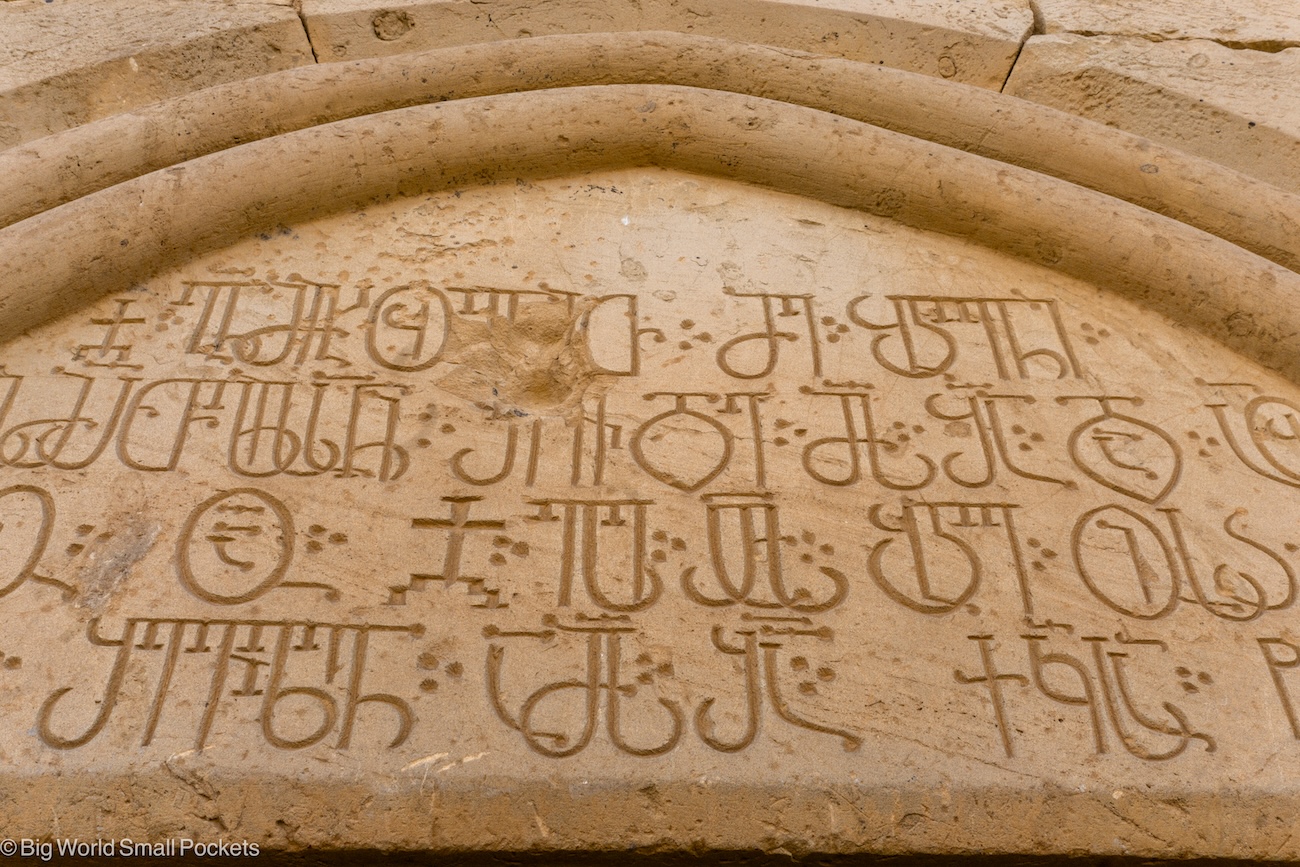
David Gareja dates back to the first half of the 6th century when Saint David settled in a natural cave with his disciple Lukian.
Over time, additional monasteries were established by his followers, including Dodo’s Rka and Natlismtsemeli Monastery.
The complex became one of the most important religious and artistic centres in medieval Georgia.
Monks created elaborate cave churches decorated with frescoes, many of which depicted Georgian kings and saints.
The monasteries survived Mongol invasions, Persian attacks and Soviet occupation, although parts of the site were damaged or abandoned over time.
During the Soviet era, the area was even used as a military training ground before public protests helped protect the complex.
Today, parts of David Gareja remain active monasteries with resident monks still living onsite.
What to Expect When Visiting David Gareja
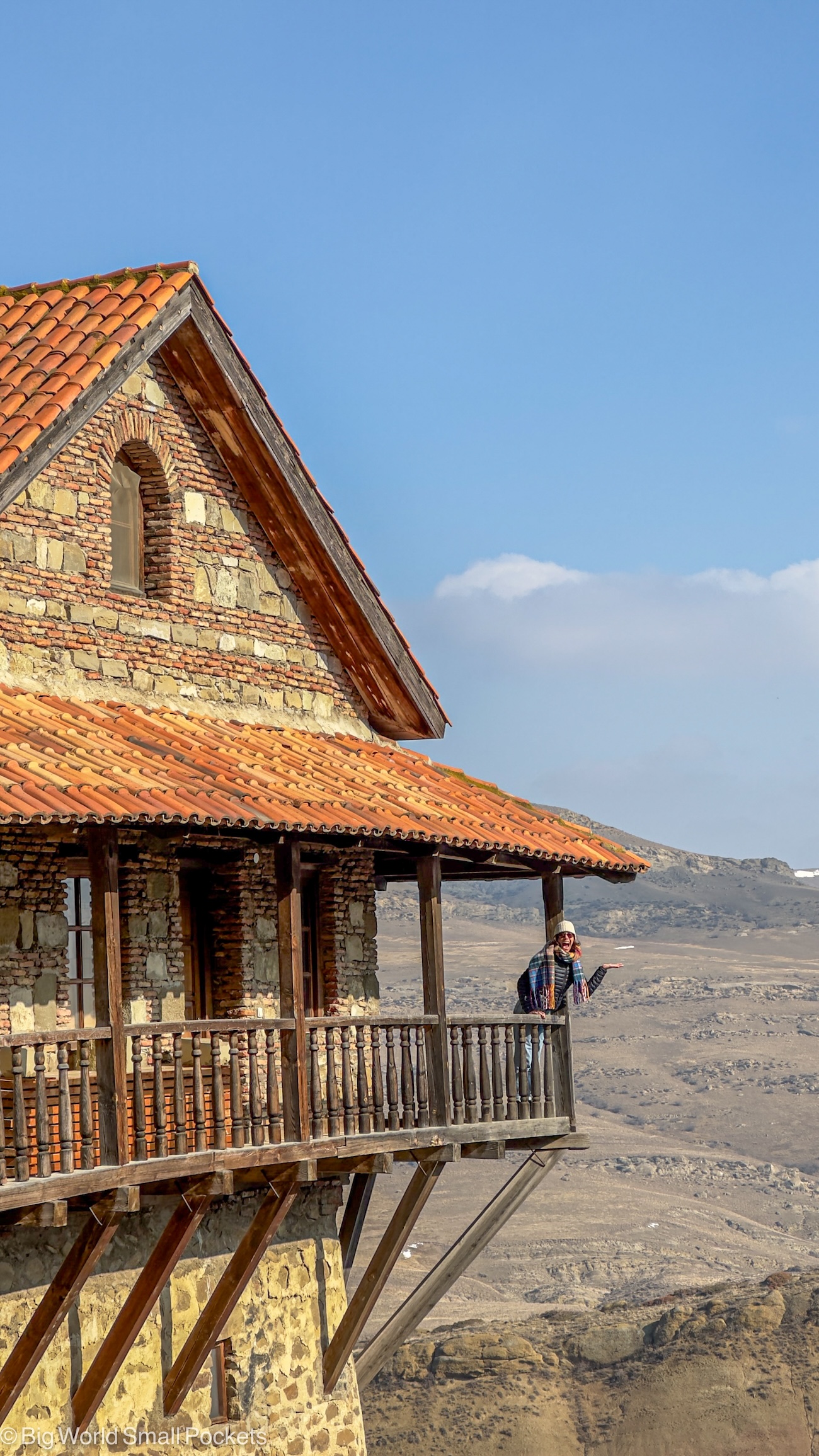
St David’s Lavra Monastery
This is the main accessible part of the complex and the section most visitors explore today.
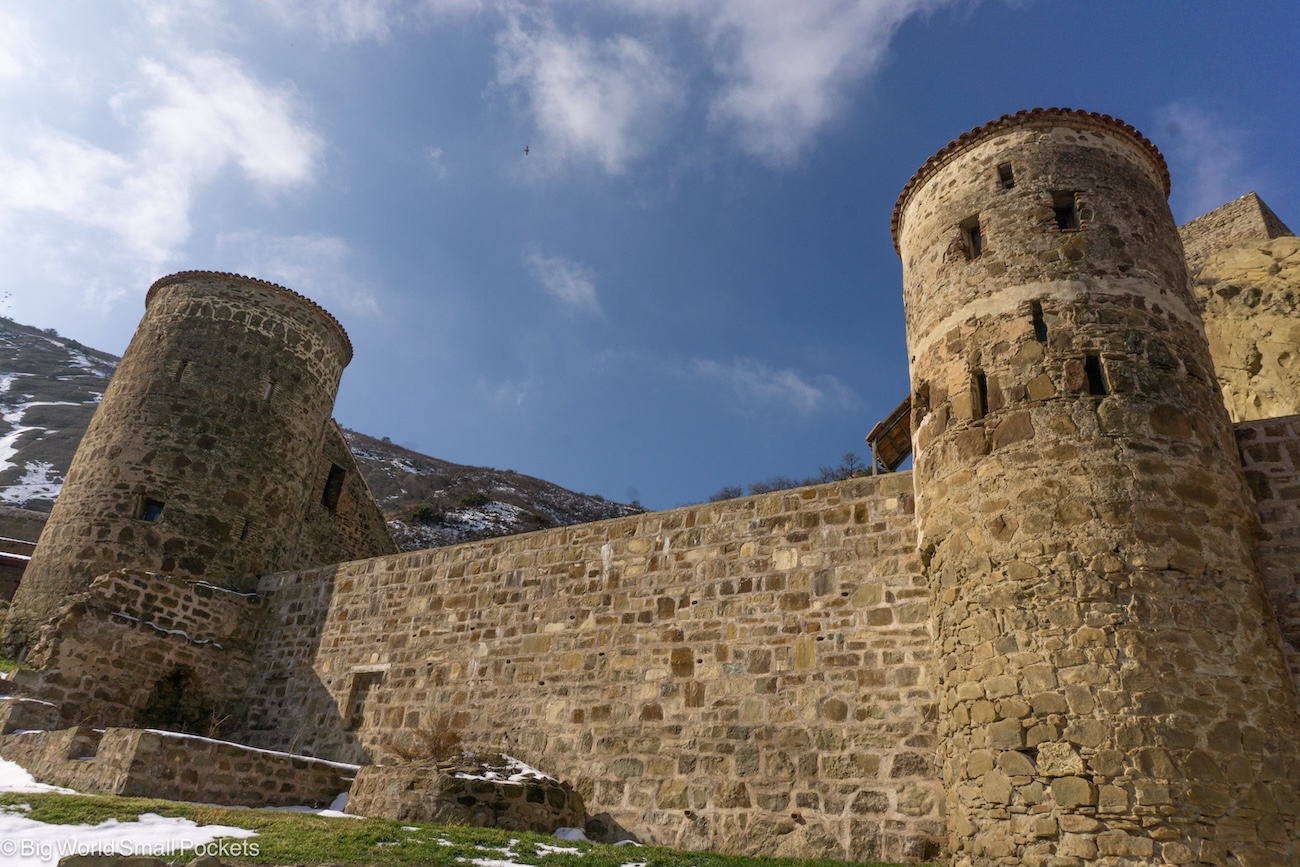
Built into the cliff face, the monastery includes stone staircases, cave chapels, courtyards and monk cells carved into the rock.
You’ll also find small churches, defensive walls and panoramic viewpoints over the surrounding landscape.
Restricted Areas
One important thing to know before visiting is that some parts of the upper monastery complex remain closed because of ongoing border disputes between Georgia and Azerbaijan.
Historically, visitors could hike up to Udabno Monastery and see famous frescoes along the ridge, but access is currently restricted.
That said, the lower monastery is still absolutely worth visiting for the scenery and atmosphere alone.
Working Religious Site
David Gareja is still an active monastery, so respectful clothing is important.
Women are generally expected to cover their heads and wear skirts below the knee.
Men should avoid shorts and sleeveless tops.
Scarves and wrap skirts are often available at the entrance if needed.
How to Get to David Gareja From Tbilisi
Join a Day Tour
For most travellers, joining a guided tour is the easiest option.
Tours to David Gareja usually include…
- Return transport from Tbilisi
- A guide
- Stops at viewpoints or rainbow hills
- Sometimes wine tasting in Kakheti
Budget group tours typically cost between 70 and 120 GEL per person depending on inclusions.
You can browse current tours here
Use the Gareji Line Shuttle
A popular budget option is the seasonal Gareji Line transfer service.
This shared minibus operates from Tbilisi and gives travellers several hours to explore independently.
Prices are usually around 40 GEL return.
Usually the service only runs in the summer months.
Hire a Car
Driving gives you the most flexibility, especially if you want to combine David Gareja with Kakheti wine country.
The drive from Tbilisi takes around 1.5 to 2 hours.
Most roads are now paved, although sections near the monastery can still be rough in places.
You do not necessarily need a 4WD in good weather, but a rental vehicle in Georgia with decent clearance helps.
Check out rental car deals here.
Best Time to Visit David Gareja
Spring & Autumn are Ideal
The best months to visit are…
- April to June
- September to October
During these months, temperatures are pleasant for walking and photography.
Autumn is especially beautiful because the surrounding hills take on warm golden colours.
Avoid Mid-Summer Heat
The area is semi-desert, so summer temperatures can become extremely hot.
In July and August, temperatures often climb above 35°C, and there is very little shade.
Winter Visits
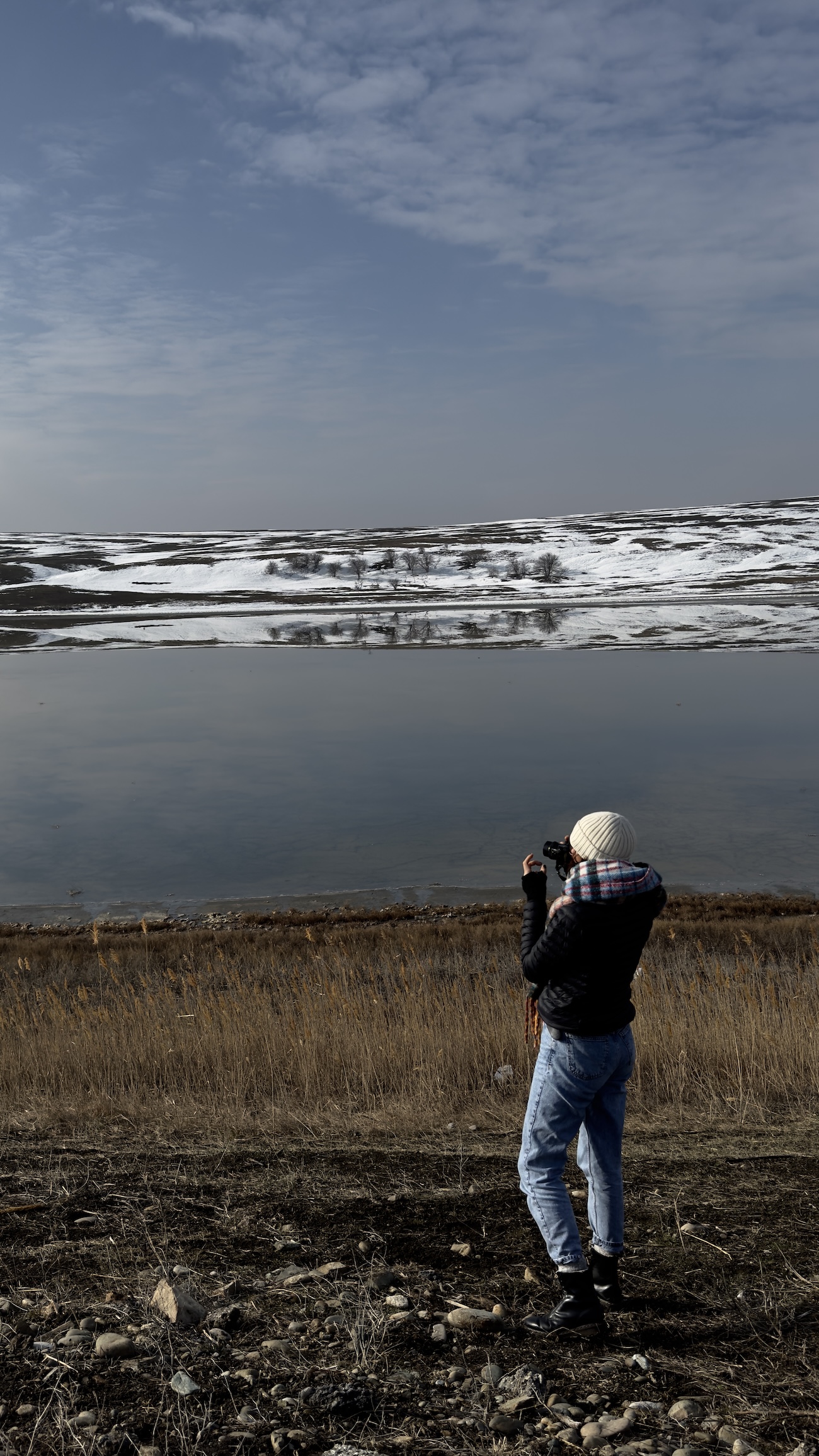
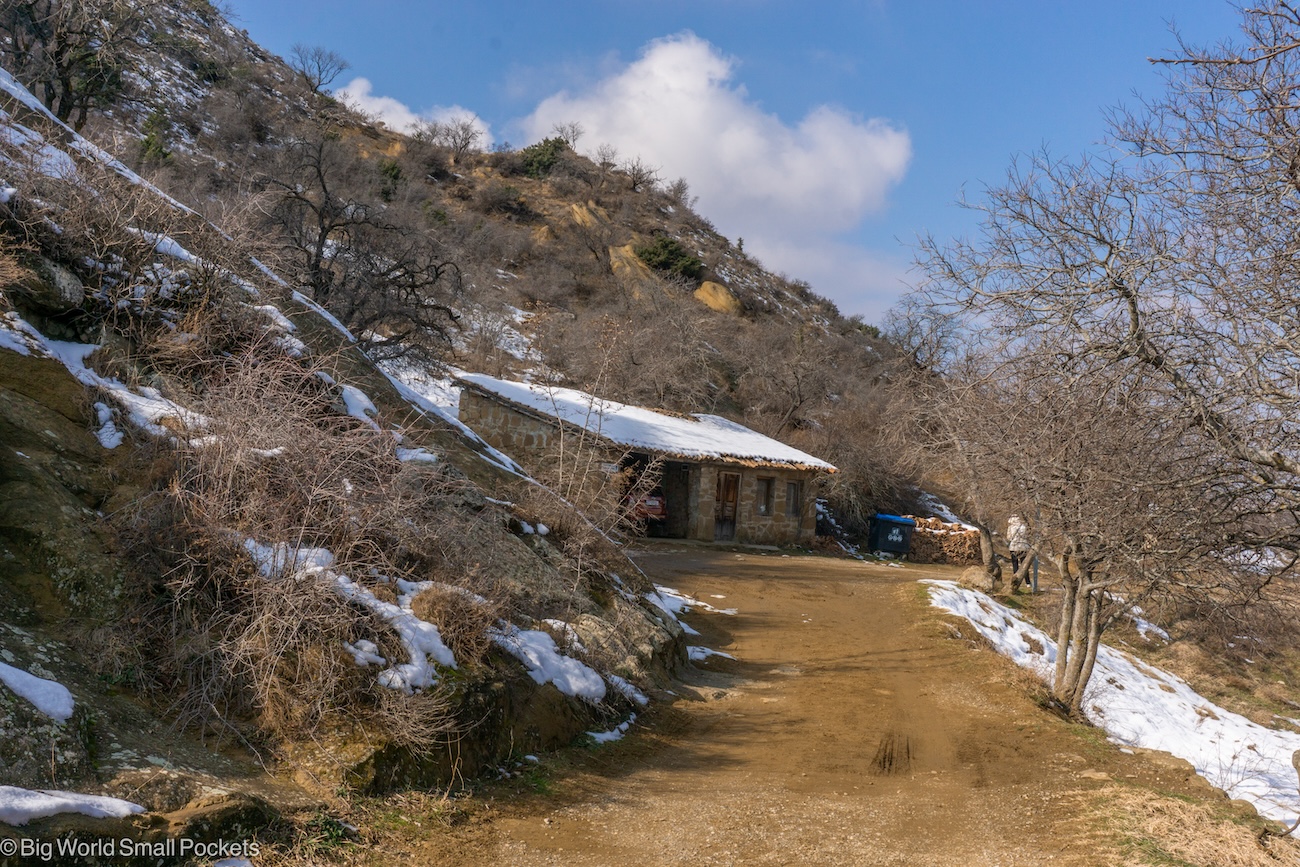
Winter can be peaceful and atmospheric, but weather conditions may make roads muddy or slippery after rain.
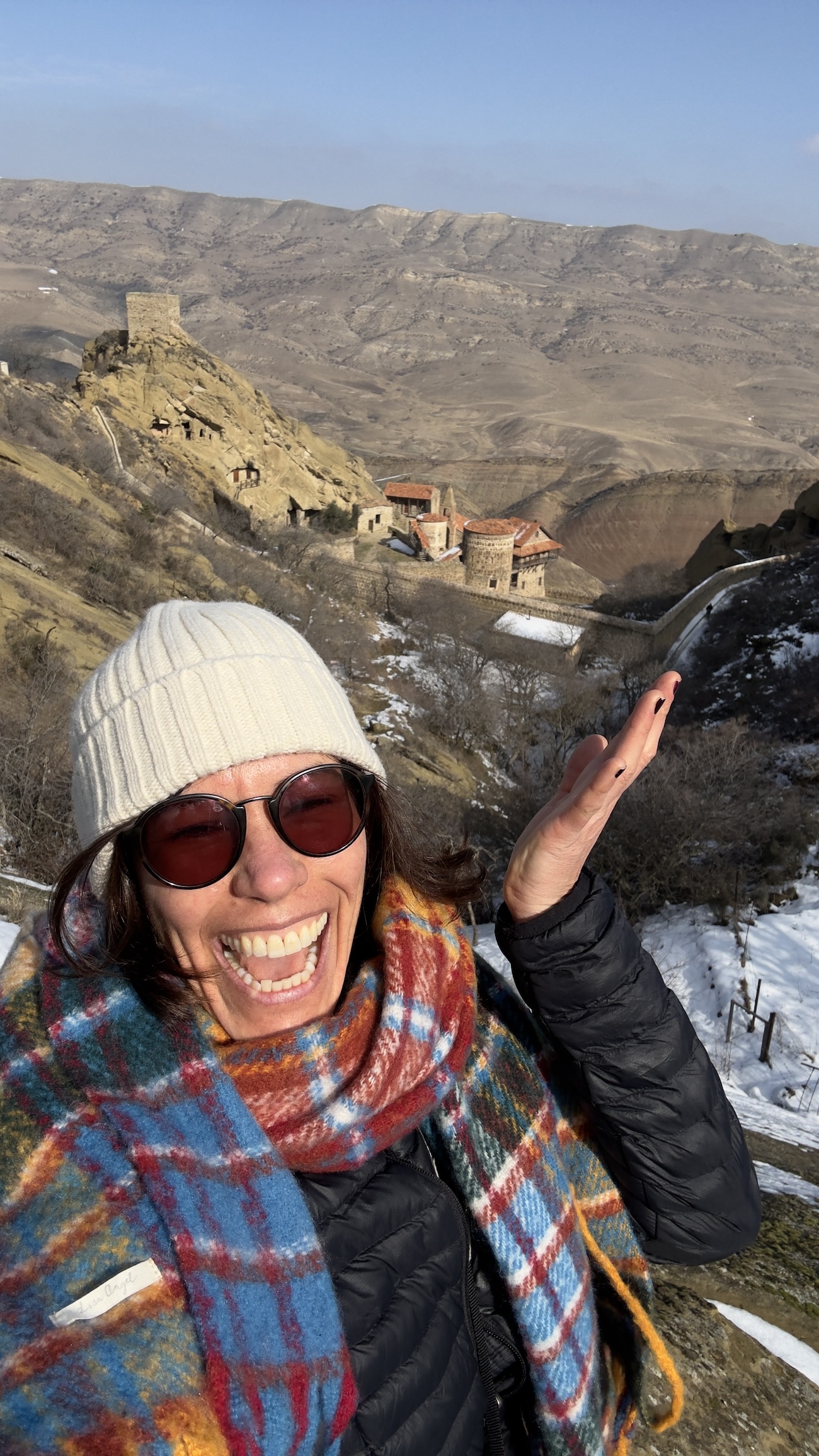
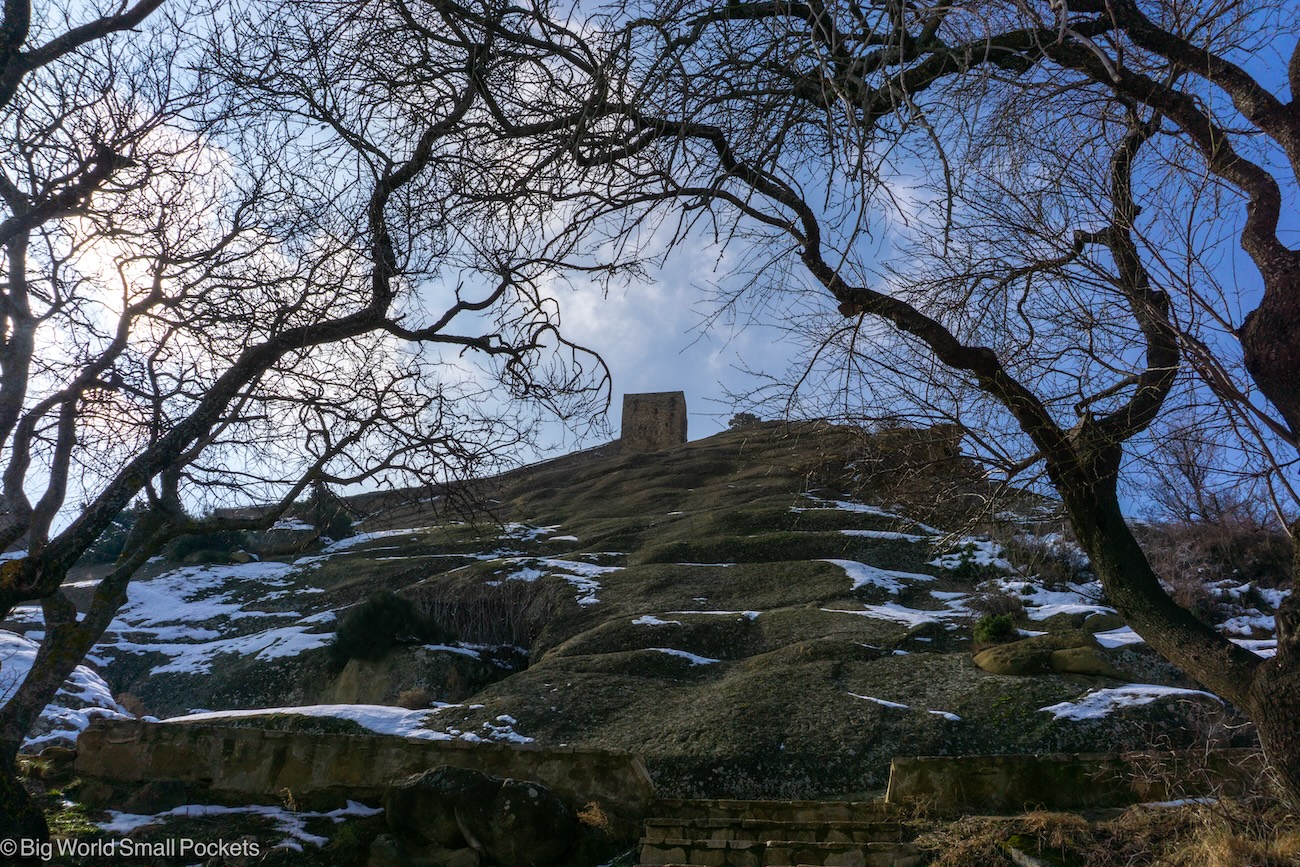
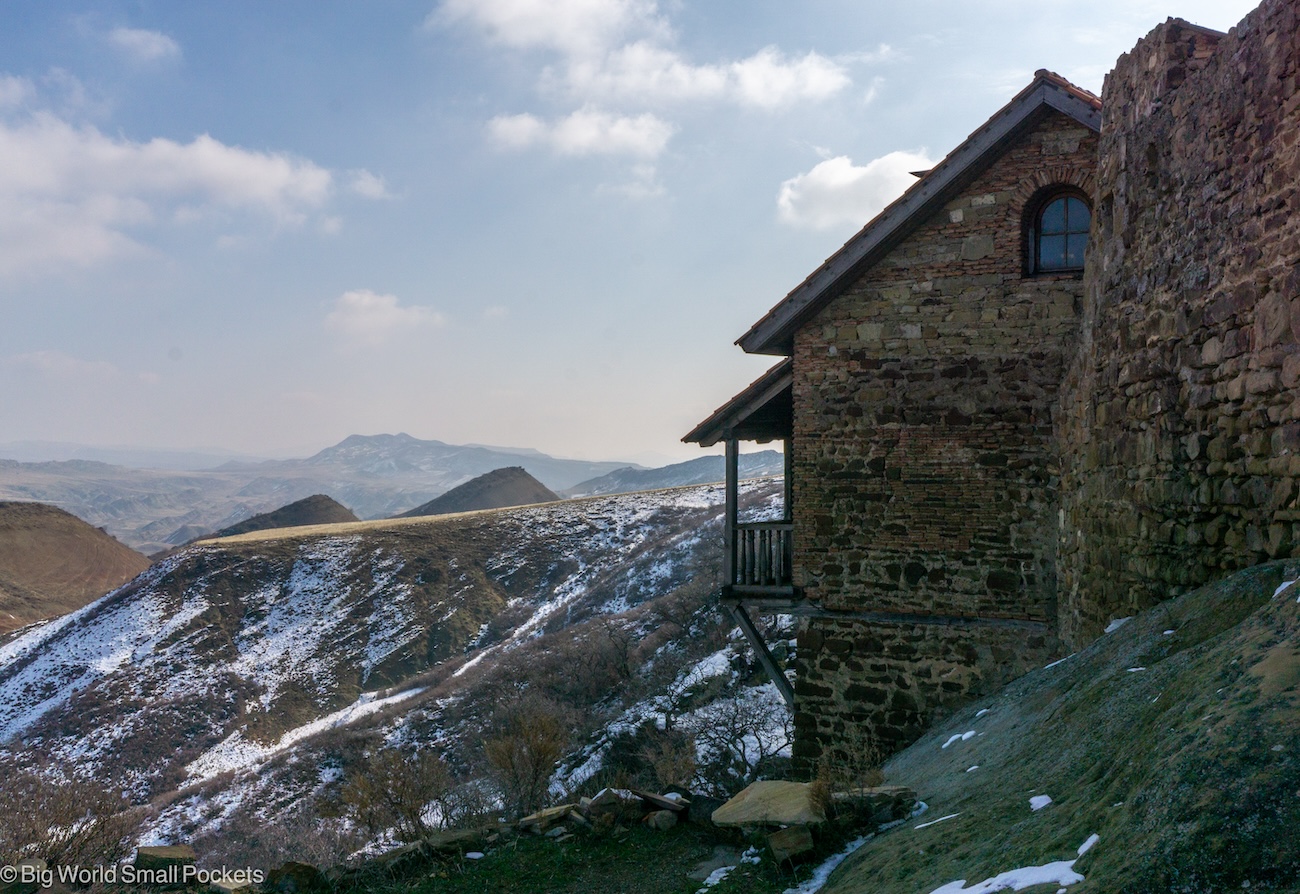
I visited in February and loved the fact I had the place to myself.
Snow on the ground made it even more atmospheric.
David Gareja Costs at a Glance
| Item | Estimated Cost |
| Entry to Monastery | Free |
| Shared Shuttle From Tbilisi | 40 GEL |
| Group Day Tour | 70 to 120 GEL |
| Private Tour | 250+ GEL |
| Car Hire Per Day | 120 to 250 GEL |
| Bottled Water/Snacks | 5 to 15 GEL |
Practical Tips for Visiting David Gareja
Bring Water
Facilities are limited, and the semi-desert heat can be intense.
Carry plenty of water, especially in warmer months.
I love my Water-to-Go bottle.
Wear Proper Footwear
Although the accessible parts are not overly difficult, there are uneven rocky paths and stairs.
Trainers or hiking shoes are ideal.
Carry Your Passport
Because the monastery sits close to the Azerbaijan border, carrying ID is recommended.
Border guards are sometimes present around the area.
Combine it with Kakheti or Rainbow Mountain
Many tours combine David Gareja with Kakheti wineries or Rainbow Mountain nearby, which makes for an excellent full-day itinerary.
Where to Stay in Tbilisi
Check out these top Tbilisi stays.
Is David Gareja Worth Visiting?
Absolutely.
Even with parts of the upper monastery closed, David Gareja remains one of the most fascinating places to visit in Georgia.
Between the ancient cave monasteries, incredible scenery and peaceful atmosphere, it offers a very different side of the country compared to Tbilisi or the Caucasus mountains.
And for budget travellers, it delivers huge value for money too.
Honestly, it’s the sort of place that makes you stop and think, “How is this not packed with tourists already?”
People Also Ask About David Gareja
Is David Gareja open to tourists?
Yes, the main Lavra Monastery section is open to visitors.
Some upper sections remain restricted because of border disputes.
How far is David Gareja from Tbilisi?
David Gareja is around 70-110km from Tbilisi depending on route, with driving times usually between 1.5 and 2 hours.
Is there an entrance fee for David Gareja?
No, entry to the monastery complex is free.
Can you visit David Gareja independently?
Yes, you can visit independently by shuttle, taxi or hire car, although organised tours are often the easiest option.
What should I wear to David Gareja?
Modest clothing is recommended because it is an active religious site.
Women should cover shoulders and knees, while men should avoid shorts.
Is David Gareja safe?
Yes, most visitors consider the area safe, although it’s sensible to carry ID because of the nearby border.
Practical Georgia Travel Tips
Getting to Georgia
I recommend Skyscanner for getting the best flights deals.
Best eSIM for Georgia
Holafly offer unlimited data eSIMs for Georgia that are perfect for staying connected across the country.
Travel Insurance
World Nomads offer simple and flexible travel insurance. Buy at home or while travelling and claim online from anywhere in the world.
If you’re a long-term traveller, digital nomad or frequent remote worker seeking travel health cover, check out Safetywing’s Nomad Insurance policies.
Travel Money in Georgia
Georgia use the Lari (GEL).
I always travel with my Wise card, which makes spending abroad cheaper with real exchange rates and no sneaky transaction or ATM fees.
Grab yours here.
Luggage Storage
Store your luggage for less in Georgia with LuggageHero.
SAVE THIS ARTICLE TO PINTEREST!


This page contains affiliate links meaning Big World Small Pockets may receive a small commission on any purchases at no extra cost to you.
