

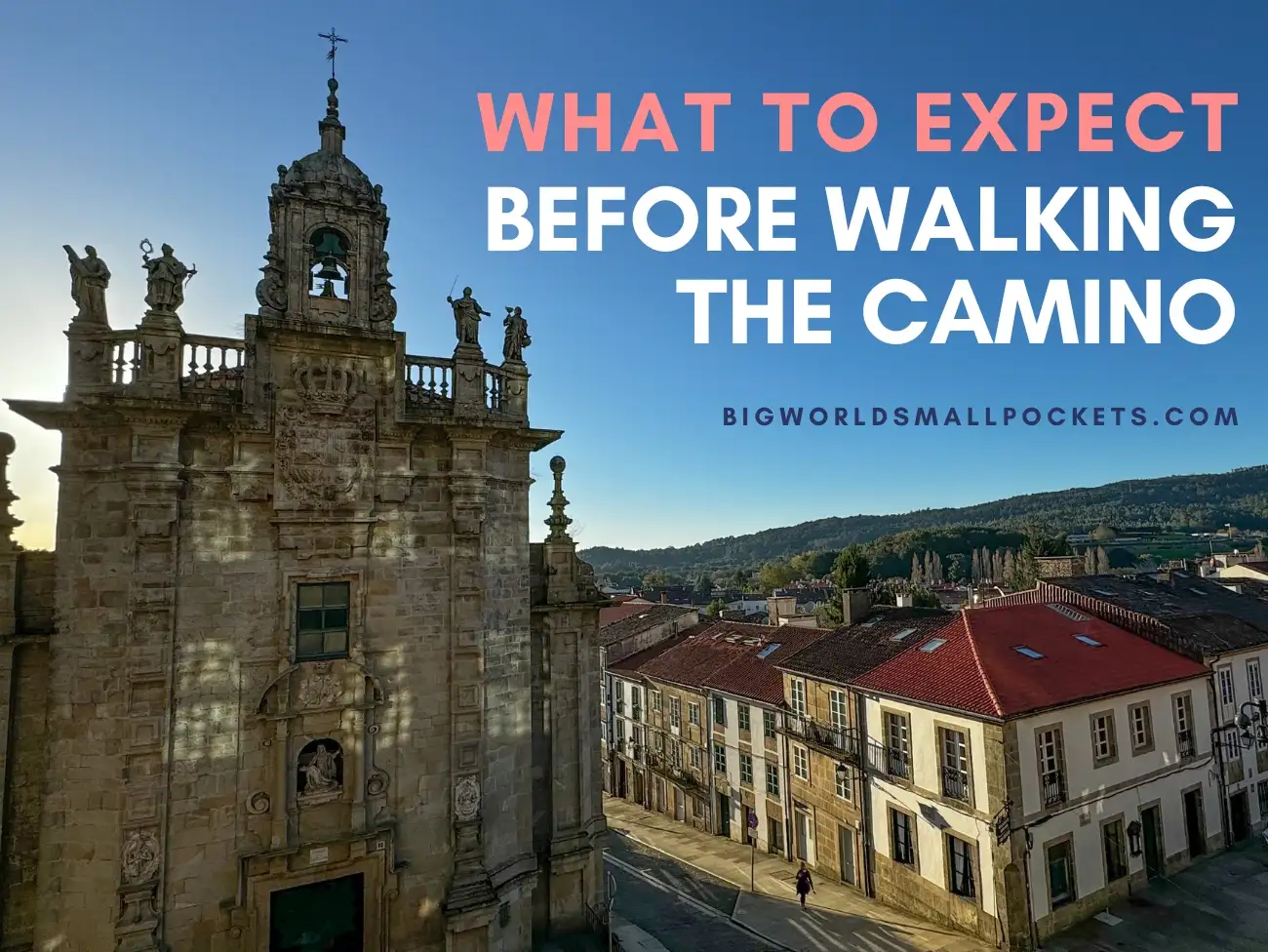
Walking the Camino de Santiago is a travel experience that sweeps you up, shakes you out and somehow settles you into a calmer version of yourself.
It is a long distance walk through Spain, Portugal or France that blends ancient tradition with modern wandering.
For many people, myself included, it becomes one of those journeys you think about long after your boots have dried.
Before setting off, I had read countless blogs, flicked through guidebooks until the corners curled, and quizzed every pilgrim I could find. Yet I still felt wonderfully unprepared!
That is the magic of the Camino – simple, soulful and unpredictable, with long days of steady walking and quiet moments that land heavier than expected.
If you are preparing for your first Camino, here is a practical and personal guide to what you can expect, plus the 5 key mistakes I made so you don’t have to.
Consider this your honest heads up from someone who has completed the Camino and is always thinking about when they can go back!
Related Posts
- Top 7 Walks in Spain
- Staying Connected on the Camino: eSIMs and Mobile Data
- Complete Female Packing List for the Camino
Understanding the Different Camino Routes

The Camino is not a single path but a network of routes that all lead to Santiago de Compostela in Galicia, northern Spain.
Each route offers something different, and choosing the right one sets the tone for your whole experience.
The French Way
This is the classic option.
It is sociable, well serviced and packed with small villages, wide landscapes and ancient churches.
This is the busiest route and ideal if you want lots of pilgrim energy.
The Portuguese Camino
The Portuguese Camino is growing rapidly in popularity.
You can walk the inland route through towns like Barcelos and Ponte de Lima, or take the Portuguese Coastal Camino, which follows beaches, promenades and fishing villages.
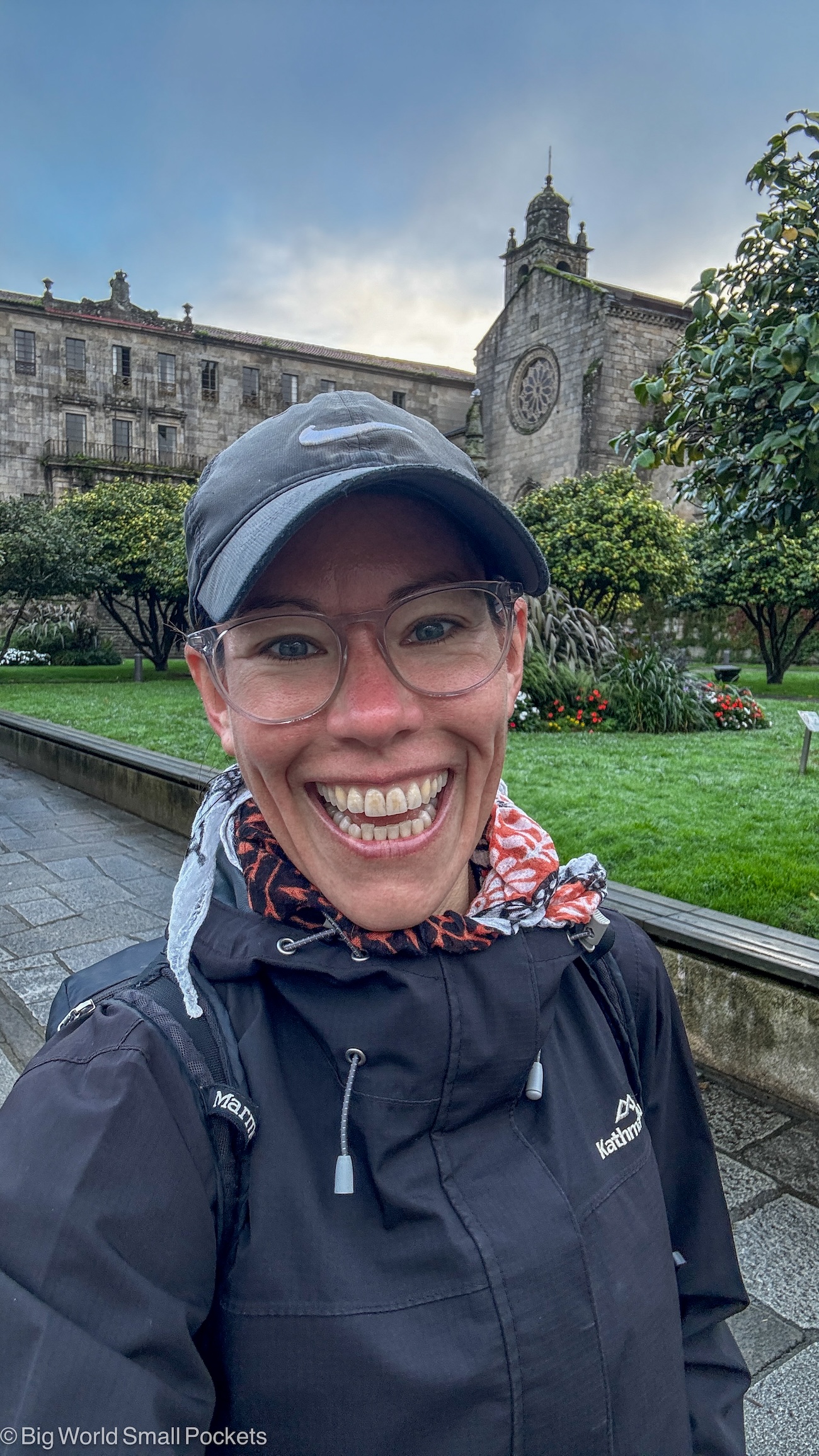
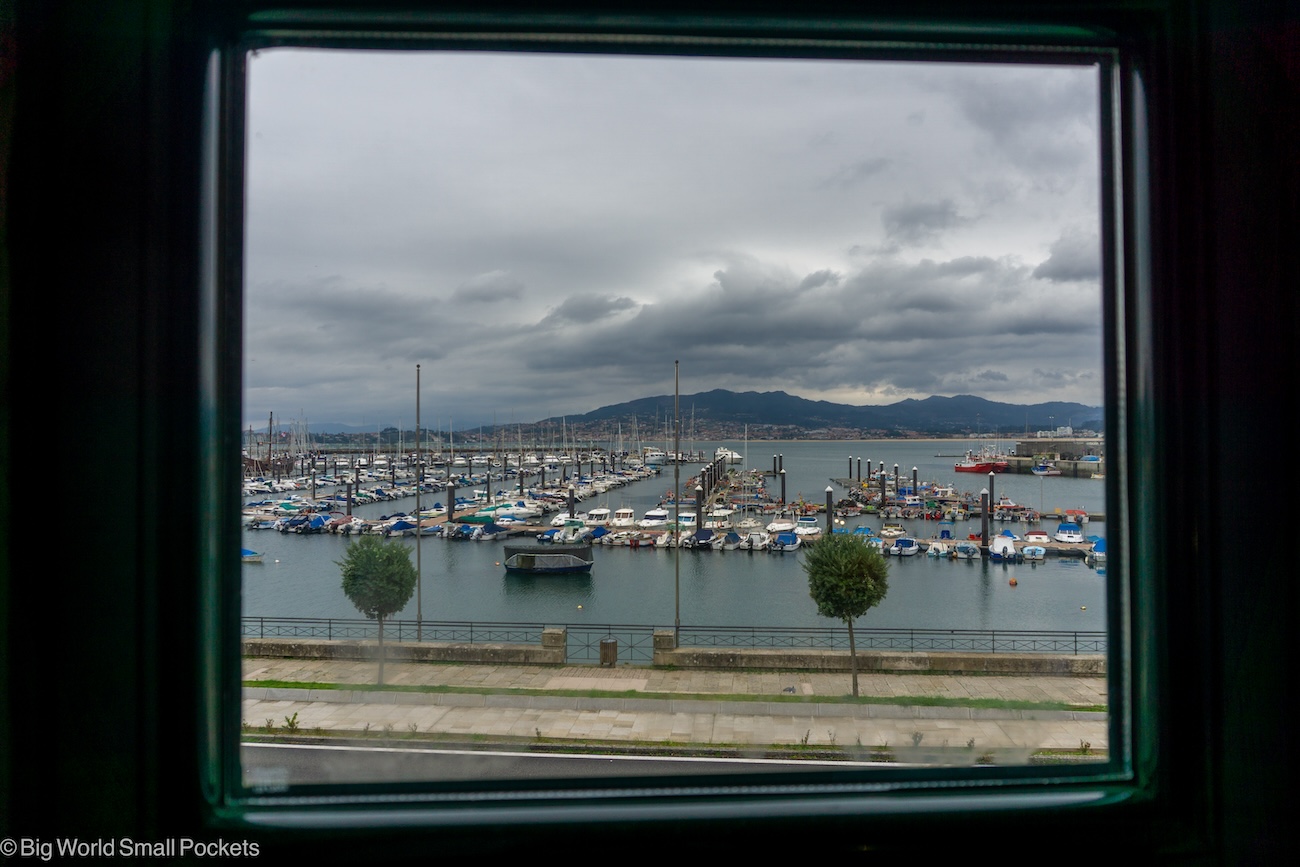
I chose the coastal route and fell in love with the Atlantic breezes, the boardwalks and the frequent café stops that appeared whenever I needed a boost.
Other Camino Routes
There are also quieter, more rugged routes, such as the Camino Primitivo or the Camino del Norte.
These require good fitness and sometimes more navigation confidence, but they offer incredible scenery and a deeper sense of solitude.
Choosing Your Start Point
Not everyone has the time or desire to walk an entire Camino route.
Thankfully, you do not need to!
The only requirement for receiving your Compostela certificate at the end is to walk at least 100km into Santiago.
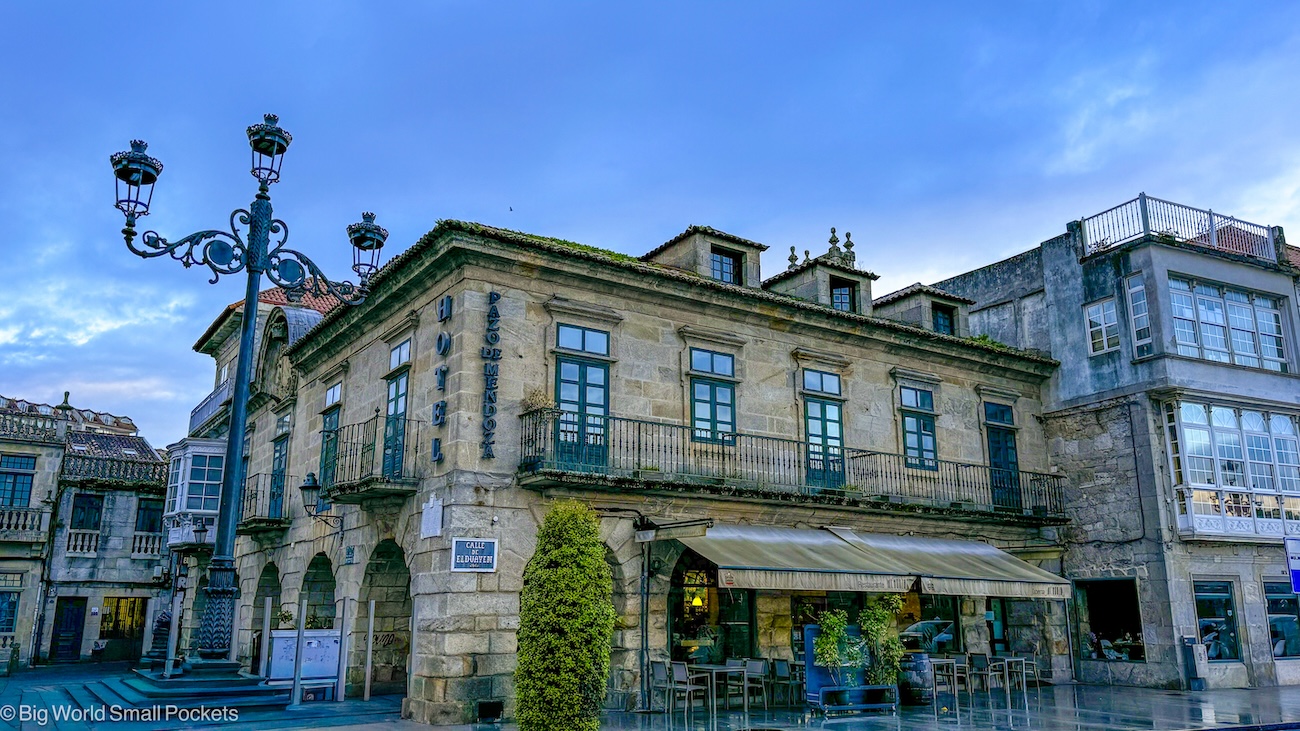
This makes Sarria on the French Way, and Tui or Vigo on the Portuguese Caminos, very popular starting points.
If you have longer, starting in Porto, Lisbon or Saint Jean Pied de Port lets you settle into a proper walking rhythm on the most popular routes.
Just be realistic with your fitness and daily distance expectations.
Most pilgrims walk between 20 – 25km per day, which is manageable with a bit of practice and regular café breaks.
Seasonality and Weather
Your choice of season can make or break your Camino experience, which leads directly to the first big mistake to avoid.
Mistake 1: Opting for the summer season
Many assume July and August are perfect walking months.
The truth, however, is brutally different.
During these months, temperatures soar, shade disappears, accommodation fills fast, prices rise and the trail becomes crowded.
The heat alone can turn a gentle pilgrimage into a slow march of determination.
Solution 1: Hike in Shoulder Season
Shoulder season is far more forgiving.
May and October offer beautiful weather, manageable crowds and good value rooms.
April, June and September are also popular, but May and October remain the sweet spots for most first timers.
I walked in shoulder season and loved the cooler days, quiet mornings and easier pace of life.
Terrain, Road Walking and Trail Conditions
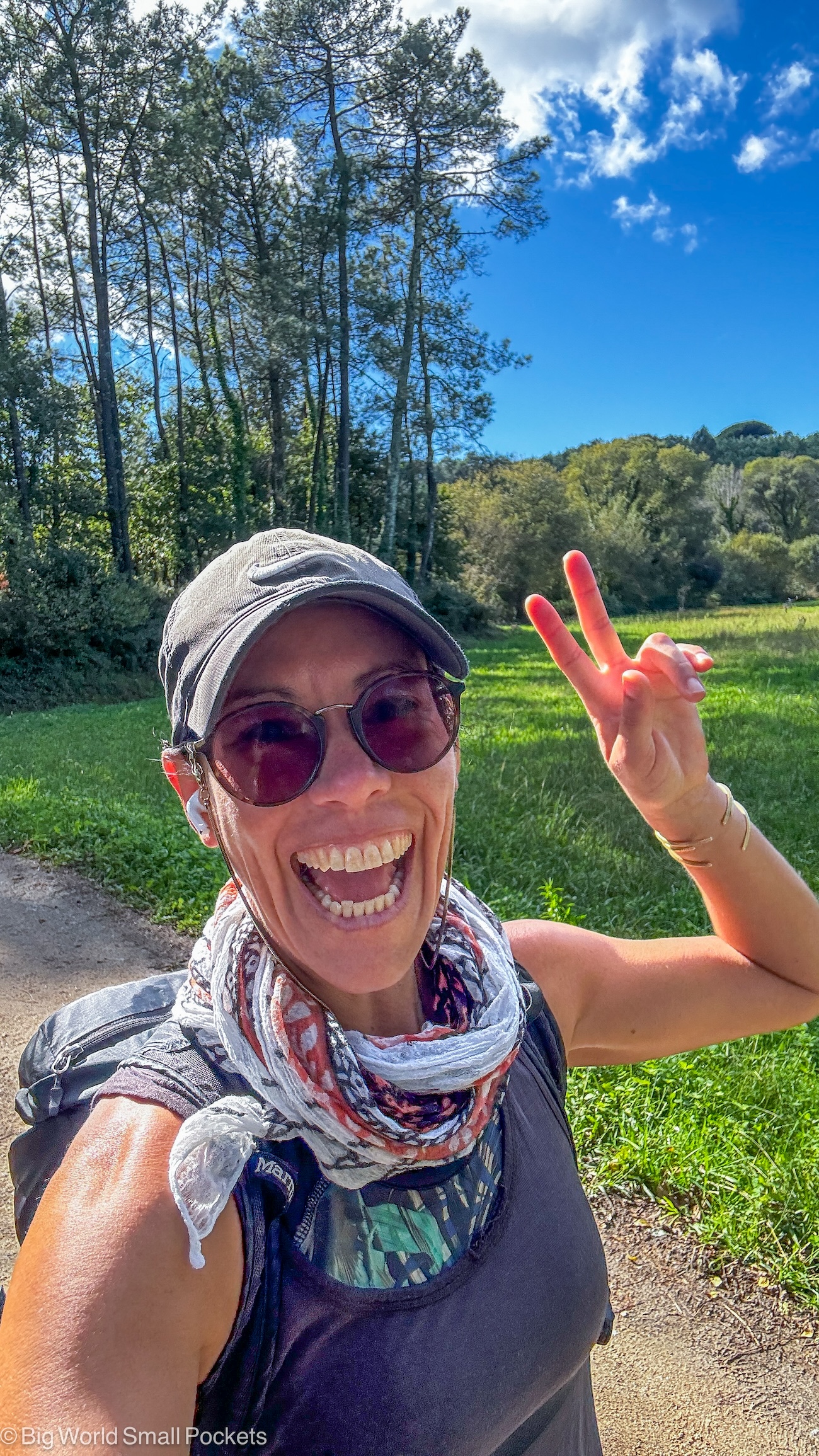
Most people imagine the Camino as endless countryside paths, but in reality, it is a patchwork of surfaces.
Expect woodland trails, gravel lanes, ancient cobbles, coastal boardwalks and stretches of tarmac, especially when passing through towns.
The Portuguese Coastal Camino has long sections of wooden boardwalks by the sea, which are a joy to walk in good weather.
The French Way brings more rural countryside.
While the Primitivo Camino adds mountain trails to the mix.
Road walking does happen, but rarely for whole days, and early starts help avoid morning traffic.
Good shoes with cushioning make a huge difference, especially on harder surfaces.
Trekking poles also ease the impact and help on descents.
Signposting and Navigation
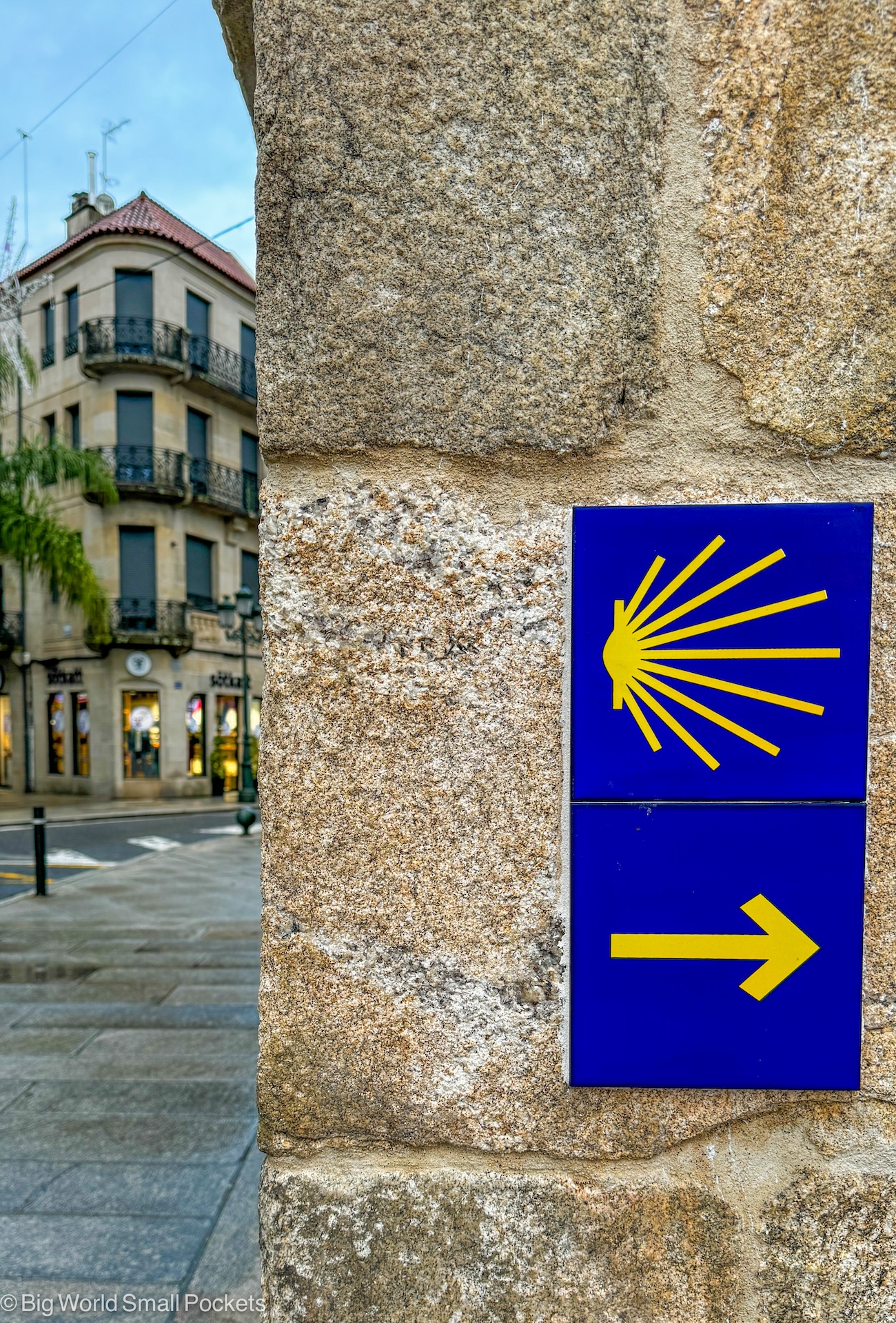
One of the loveliest surprises is how well marked the Camino is.
Yellow arrows guide you from start to finish, painted on walls, roadsides, kerbs and lampposts.
The scallop shell symbol also appears often, its lines fanning out to point you in the direction of Santiago.
On all major routes, the signage is excellent.
Indeed, it is hard to get lost and very easy to feel reassured, even if you have never walked a long trail before.
I still downloaded offline maps from Maps.me and Follow the Camino, but they were more backup than necessity.
If you want to experience the magic of the Camino, then I highly recommend Follow The Camino who can help you organise every part of this incredible journey.
Get 10% off your Follow the Camino adventure with discount code: Steph10
Scallop Shells and Their Meaning
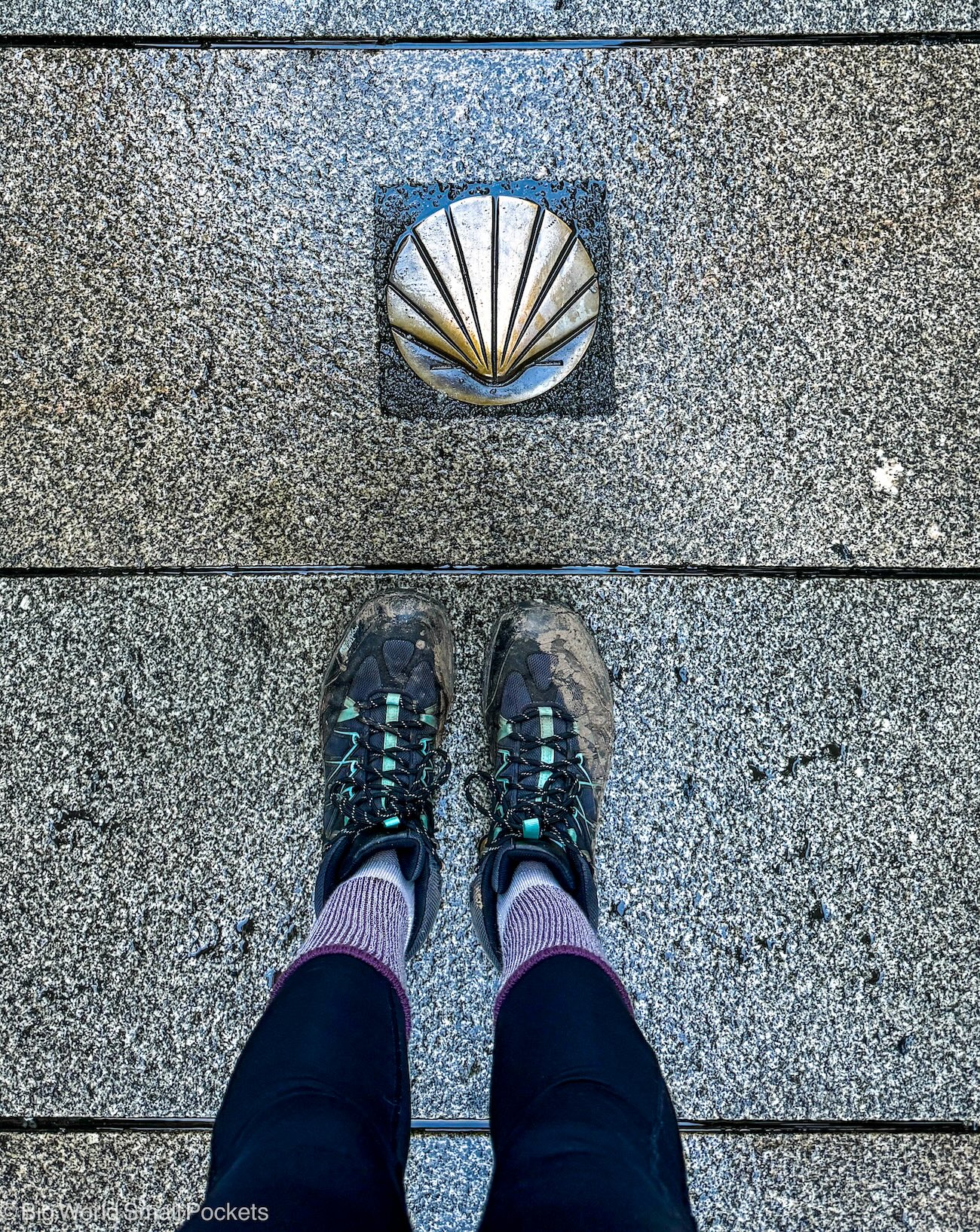
You will notice the scallop shell symbol everywhere on the Camino.
Historically, pilgrims carried real shells from the coast to Santiago as proof of their journey.
Today, most people buy one at the start and tie it to their backpack.
It is symbolic, joyful and a little badge of belonging.
It also appears in signposting, carved or painted onto markers that guide you onward.
Daily Rhythm on the Camino
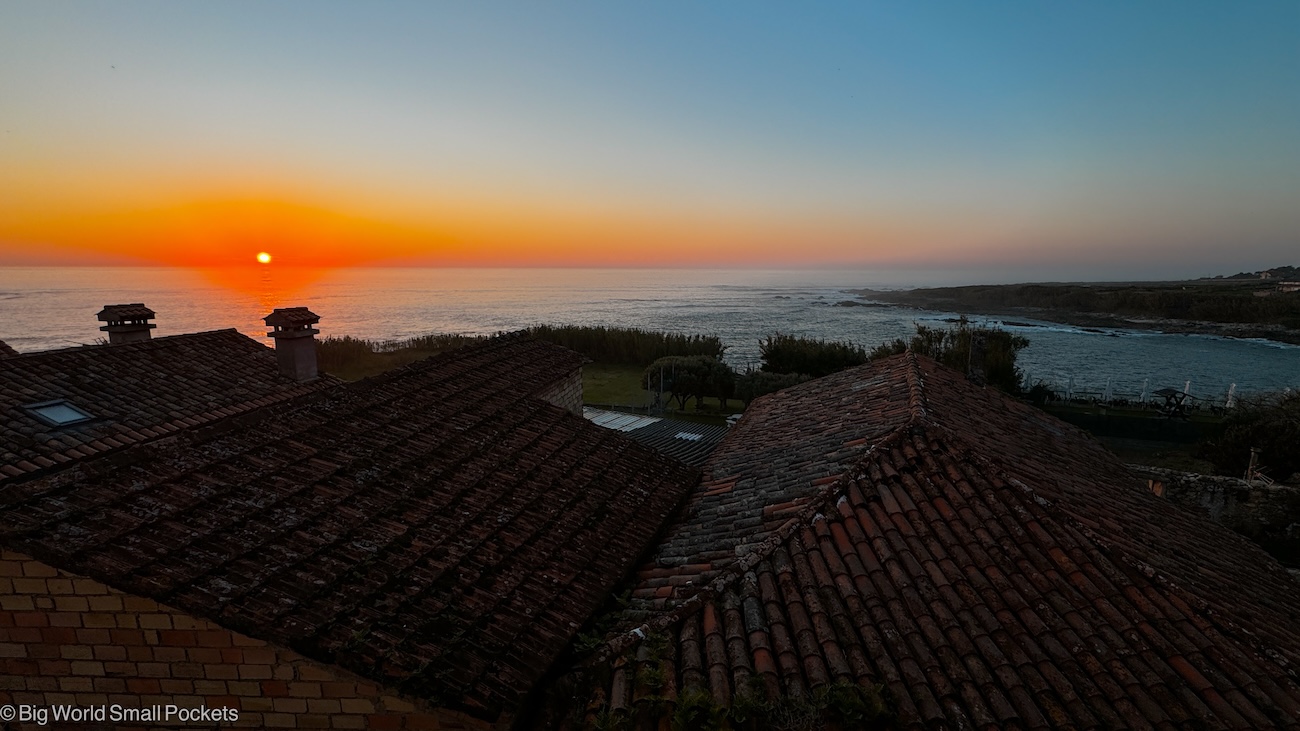
Your days will quickly settle into a rhythm when walking the Camino.
Wake early, walk during the cool hours, stop often for coffee and snacks, reach your accommodation by mid-afternoon, enjoy a late lunch, then shower, rest and join a pilgrim meal in the evening.
It is simple, peaceful and strangely addictive.
Food, Drink and Café Culture
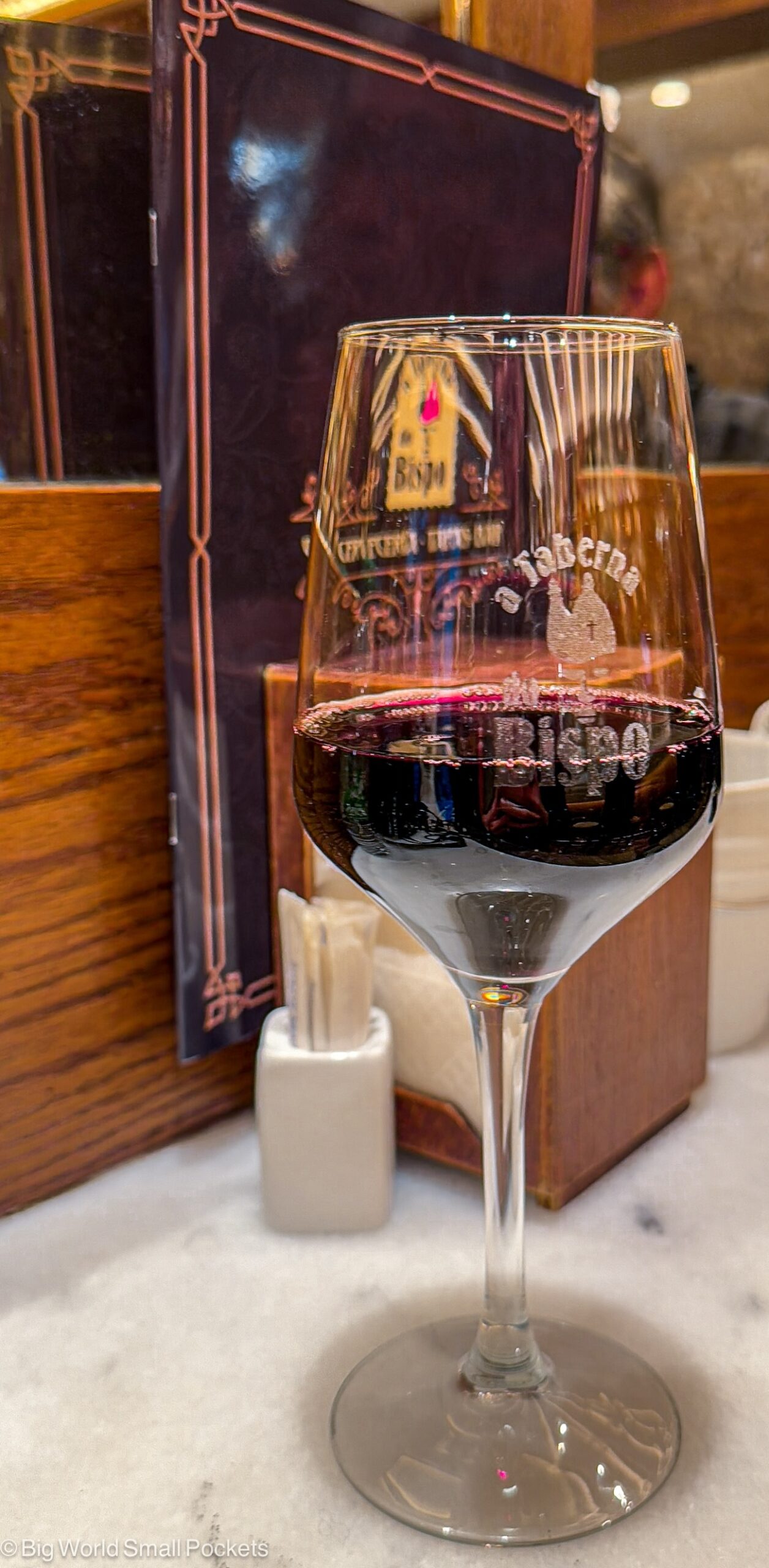
Food is a highlight on the Camino, especially the wine, which is cheap, delicious and free-flowing.
Snacks & Coffee
You’ll pass cafés, bakeries and bars frequently enough that hunger never becomes a crisis.
Although I still recommend always having some trail mix in your day pack, especially if you’re watching costs.
Coffee culture is excellent, especially in Spain, where a café con leche and a slice of tortilla can power you through several km!
Water fountains appear regularly across the route and tap water is safe to drink across most regions.
Water
To be extra safe, I highly recommend a Water-to-Go filter bottle, which removes 99.9% of bacteria and virus from any fresh water source, meaning you can safely top up almost anywhere you go.
Pilgrim Menus
By evening, the menú peregrino becomes the staple of pilgrim life.
This set menu includes a starter, main, dessert, bread, water and wine at a very affordable price.
Portions are generous and the atmosphere is friendly.
I found vegetarians were well catered for (not a given in meat-loving Iberia!)
You’ll often find yourself sitting alongside other pilgrims, swapping stories from the day, so it feels communal and comforting, especially after long distances.
Accommodation Options and How to Book
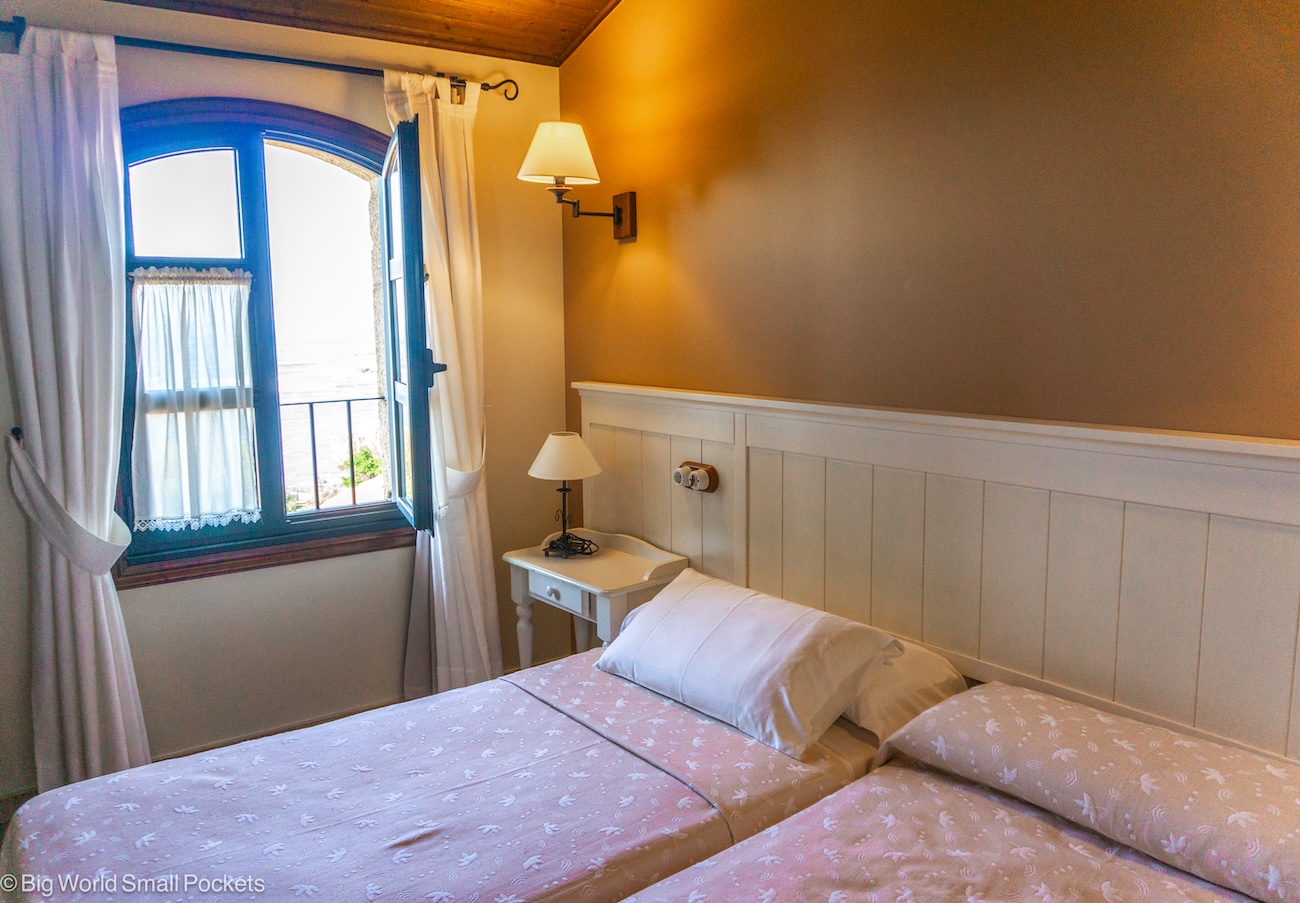
One of the biggest planning decisions on the Camino is where to sleep.
You have two main choices…
- Albergues
- Private Accommodation
Albergues are traditional pilgrim hostels with dorm beds and shared facilities.
They are sociable, budget friendly and part of the classic Camino experience.
Municipal albergues cannot be booked in advance, while private albergues usually can.
Private accommodation ranges from pensions and guesthouses to rural hotels and small boutique stays.
These offer privacy, quieter nights and your own bathroom.
They are ideal if you want a more restful experience, are walking as a couple, or simply prefer a door you can close at the end of the day.
Bookings can be made via regular sites like Booking.com, by contacting properties directly, or through specialist companies.
If you want everything arranged in advance, including rooms, route planning and airport transfers, then Follow the Camino offer excellent package options for both solo and group travellers and come highly recommended.
Luggage Transfer

This leads neatly to the second common mistake.
Mistake 2: Not Choosing Luggage Transfer
Carrying a full backpack sounds noble… until day 3!
Your pack is likely to be heavy, especially when you throw water into the equation, and walking is simply not as fun or pleasurable when you have a grinding pack to lug around.
As such, many pilgrims discover that luggage transfer is one of the best decisions they make.
Solution 2: Arrange a Baggage Courier Service
Luggage transfer, or a baggage courier service on the Camino, allows your main bag to be collected from your accommodation each morning and dropped at your next accommodation in the afternoon.
It’s a game-changer when it comes to comfort and well worth the 4-7€ daily splurge in my opinion.
If you’re on a tight budget, see if you can cut down on non-supermarket snacks or wine to make financial room for it.
I’ve written a whole article about luggage transfer on the Camino, how it works, how to book and what the prices are, so head there for more info.
The key info is that you can either book through independent courier companies, or use package providers, like Follow the Camino, who include this service in their overall Camino trip costs.
I opted for the latter, but whichever you choose, trust me that your body will thank you and your shoulders will rejoice!
What to Carry Each Day on the Camino
Which brings us to mistake number 3!
Mistake 3: Not Organising a Proper Daypack
Your [easyazon_link identifier=”B08LP1WWPT” locale=”US” tag=”bigworsmapoc-20″]daypack[/easyazon_link] becomes the most important thing you carry on the Camino.
Think of it as your comfort kit.
It should be supportive, well fitted and just big enough for daily essentials.
Solution 3: Select a Good Rucksack and Pack Well!
A good hip belt and breathable back panel on your Camino day pack make long days far more comfortable.
Inside, you should include water, snacks, a [easyazon_link identifier=”B0CLR98667″ locale=”US” tag=”bigworsmapoc-20″]lightweight waterproof jacket[/easyazon_link], sun protection, phone battery charging pack and cable, tissues, plasters, antiseptic wipes, your pilgrim passport and a guidebook or offline map.
Pilgrim Passport and Stamps
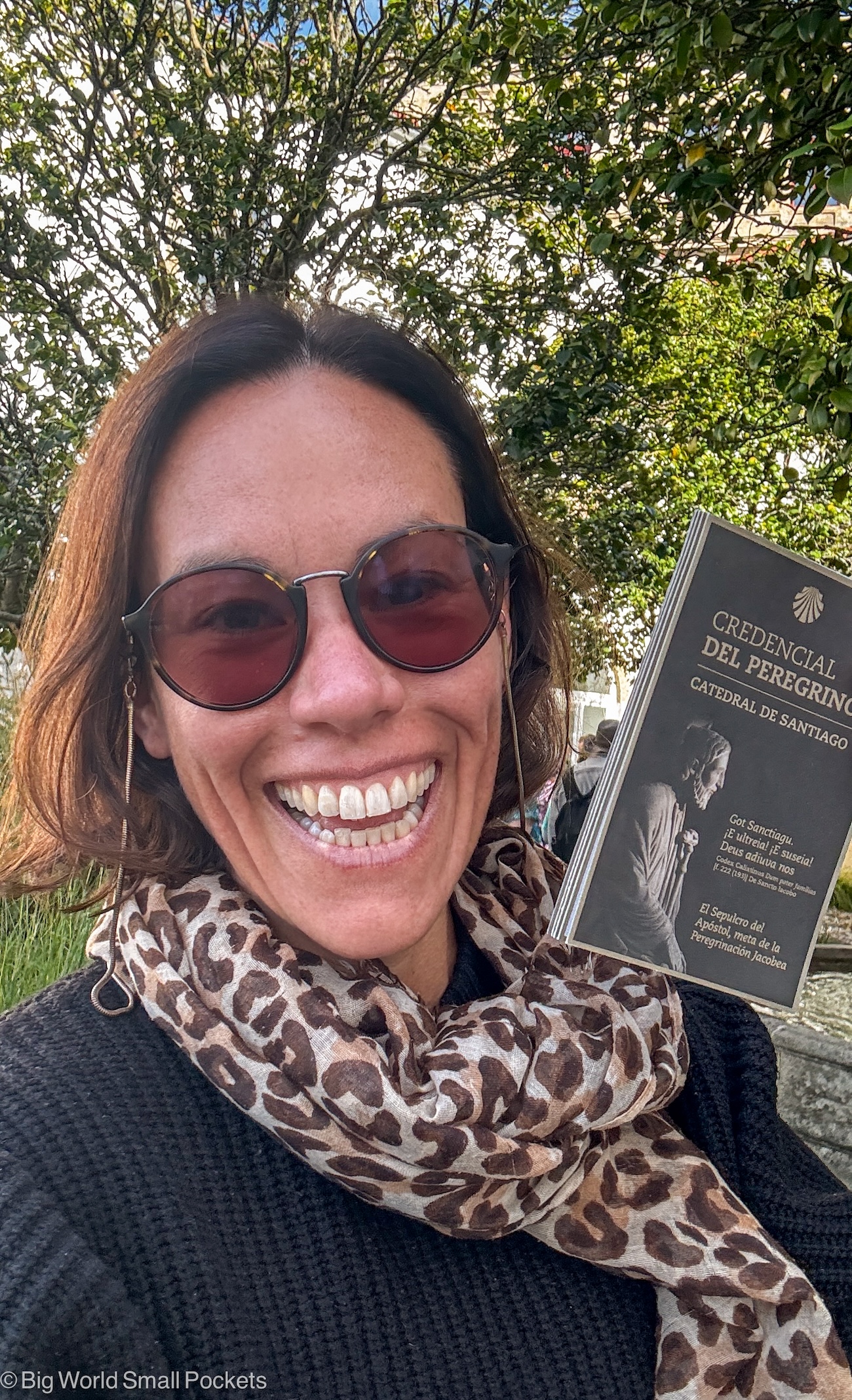
The pilgrim passport, or credencial, is one of the most cherished parts of the Camino.
You can collect stamps from cafés, churches, albergues and tourist offices along the way as you hike or cycle.
These stamps prove your journey of 100km hiking (or 200km cycling) to Santiago Compostela and are required for the Compostela certificate you’ll receive when you reach Santiago.
Which leads us to mistake number 4.
Mistake 4: Forgetting your Pilgrim Passport!
Never bury it at the bottom of your bag!
You will use your Pilgrim Passport multiple times per day, especially in the final 100km, where 2 daily stamps are mandatory.
Solution 4: Keep it in a Top Pocket
Keep your Pilgrim Passport in a waterproof ziplock bag, within in a top pocket of your daypack, so that it’s safe, dry and easy to access.
Watching the pages fill up is strangely emotional and quickly becomes a record of every café, village and memory along the way.
Solo Travellers on the Camino
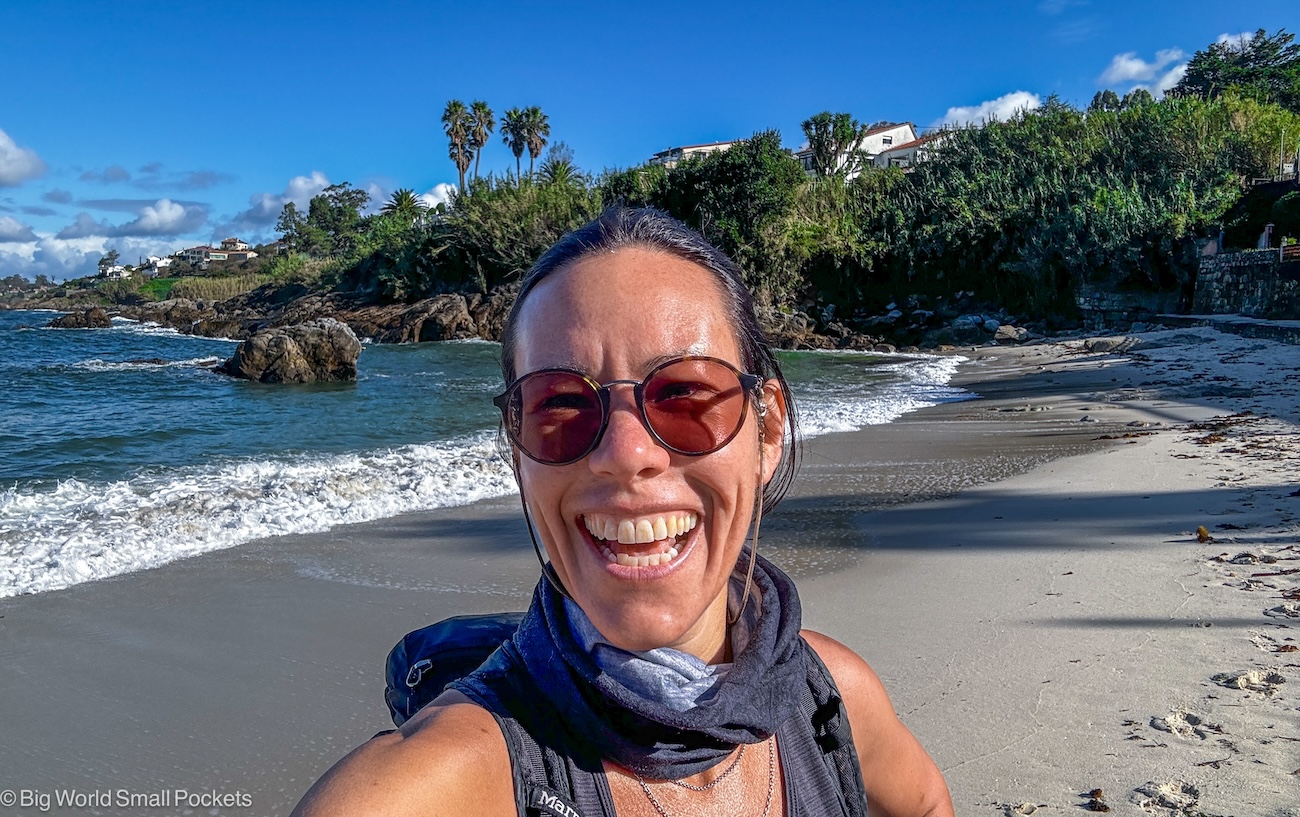
The Camino is one of the easiest and safest long distance walks in Europe for solo travellers.
I did it as a 40 year old female and felt totally safe the whole way. Read more about my solo Camino experience.
It attracts people of all ages and backgrounds and you’ll never feel alone for long.
Friendly faces appear at cafés, along the trail and in shared meals and bonds form quickly.
By the end, many people say their Camino family is what made the journey special.
Walking solo gives you freedom, while the Camino community offers companionship whenever you want it.
A Little Spanish Goes a Long Way
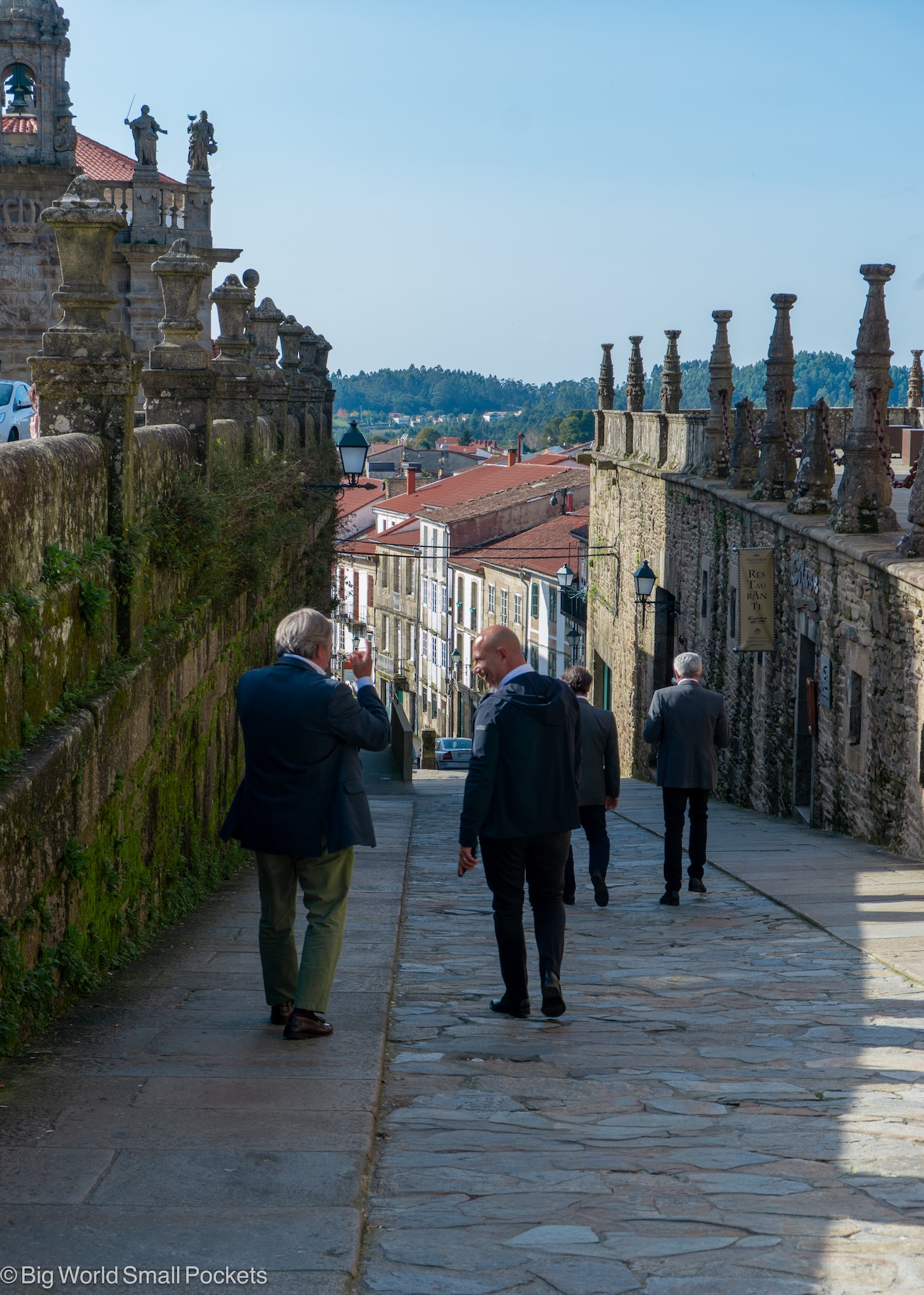
Which brings us to the final Camino mistake I recommend you avoid.
Mistake 5: Not Learning a Bit of Spanish in Advance
You do not need fluency, but basic phrases help enormously.
Solution 5: Get Some Basic Phrases Down
Simple words for food, directions and politeness go a long way.
Locals always appreciate the effort and interactions become warmer and easier as a result.
Arriving in Santiago de Compostela
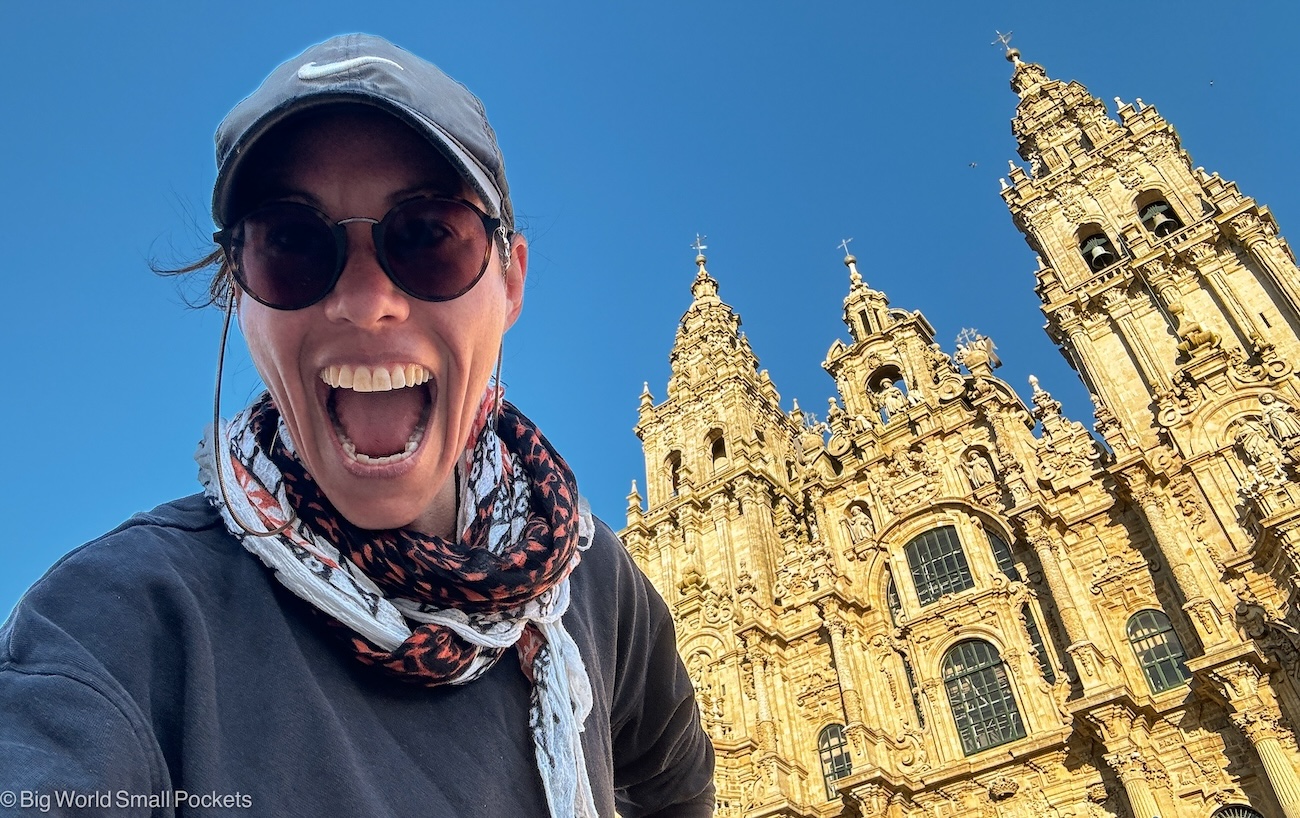
The final approach to Santiago is emotional.
Bagpipes play near the cathedral, pilgrims gather in the square and the sense of achievement washes over you slowly and fully.
Visit the pilgrim office for your certificate, explore the old town and celebrate with a meal.
I recommend staying at least one full extra day in Santiago after you arrive to soak it all.
After all, you’ve travelled a long way to get here and the city is beautiful, lively and full of energy as thousands of journeys converge at once.
Get more tips for planning the best arrival at Santiago in this article I wrote.
Camino Quick Tips
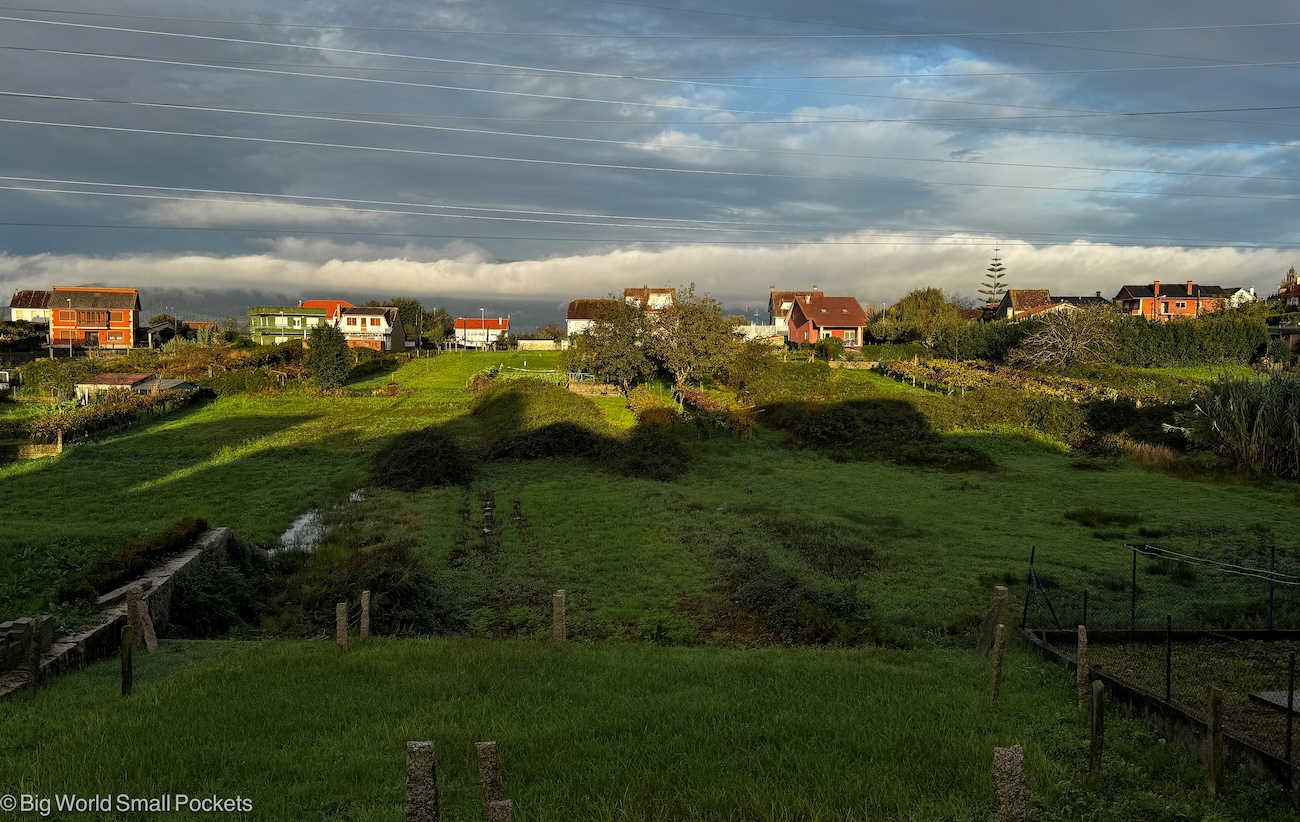
When to Hike the Camino?
I recommend Spring or Autumn for best weather, lowest crowds and reasonable prices.
eSIM
Holafly offer unlimited data eSIMs for Spain, Portugal or France that are perfect for staying connected on the Camino.
Insurance
World Nomads offer simple and flexible travel insurance. Buy at home or while travelling and claim online from anywhere in the world.
Travel Money
Spain, Portugal and France use the Euro.
I always travel Europe with my Wise card, which makes spending abroad cheaper with real exchange rates and no sneaky transaction or ATM fees – grab yours here.
SAVE THIS ARTICLE TO PINTEREST!
Walking the Camino de Santiago is one of the most rewarding adventures you can take.
It is simple yet transformative, social yet introspective, challenging yet deeply restorative.
Prepare well, choose the right season, pack sensibly and consider luggage transfer if you want to truly enjoy the walk.
And if you prefer a seamless experience with accommodation, route planning and support, Follow the Camino are a great operator to consider.
Your Camino starts long before your first step, and when you finally take it, you will understand why this journey captures so many hearts.
My Camino experience was gifted by Follow the Camino but, as always, all views are my own.
This page contains affiliate links meaning Big World Small Pockets may receive a small commission on any purchases at no extra cost to you.
